Sergei Sobyanin: Moscow will continue to support high-tech enterprises
In accordance with the strategy for Moscow’s industrial development for the period until 2030, the implementation of projects aimed at reindustrialization of the capital and ensuring Russia’s technological sovereignty will continue. Significant funds have been earmarked for the creation of industrial and manufacturing infrastructure to accommodate companies manufacturing high-tech products.
“Moscow is developing projects to ensure Russia’s technological sovereignty. We will create the necessary infrastructure for this. Leading the way in the development of the city’s high-tech industry is the Moscow Technopolis special economic zone (SEZ), a territory with a special legal status, which offers a preferential regime for investors. By 2030, the total area of industrial and office-laboratory facilities in the SEZ will be increased by a factor of 3.5, and more than 90,000 new jobs will be created,” Sergei Sobyanin wrote in his channel in the MAX messenger.
Source: Moscow Mayor’s channel in the messenger MAX
Today more than 230 high-tech enterprises have set up production sites in the capital’s SEZ, creating more than 28,000 jobs. The total number of SEZ residents is projected to reach about 600 by 2030.
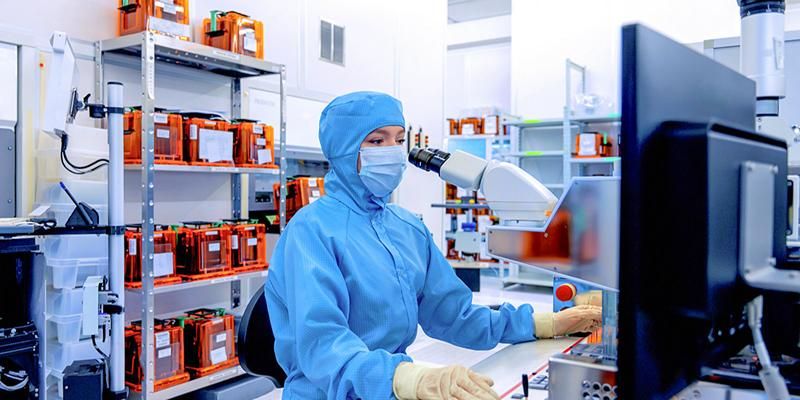
On the sites of the Moscow Technopolis SEZ residents develop advanced future-oriented technologies : satellites, critical medicines including drugs to treat Bekhterev’s disease and multiple sclerosis, anti-inflammatory drugs with no equivalents anywhere else in the world, the only photolithograph apparatus in Russia, and well as machines with very rare excimer lasers for use in microelectronics production processes. The products made by residents of the capital’s SEZ are in demand both in Russia and abroad.
In order to facilitate the development of production facilities in the SEZs, a cluster approach is being implemented, which allows companies to pool their resources and expertise. Clusters are already operating in a number of fields, including microelectronics and photonics, pharmaceuticals, electric vehicles, batteries and elevator construction and vertical transport. By 2030, at least 13 inter-sectoral clusters with a total area of more than seven million square meters and providing jobs for 100,000 people will be operating in the capital.

Moscow’s technoparks are an important element of the innovation ecosystem. Today, 49 technoparks, with more than two million square meters of modern premises, have been created in Moscow. More than two thousand companies implement their projects and more than 75 thousand specialists work in the city’s technoparks. Technopark residents develop and produce new drugs, medical products, unmanned and robotic systems, batteries, superconductors and much more.
Since the program to support the creation of technoparks began, private investors have invested more than 180 billion rubles in innovation infrastructure. Significantly, the capital’s technoparks are now 99 percent fully occupied. In accordance with the approved entrepreneurship development strategy for Moscow, work is underway to scale up the technopark ecosystem and greatly increase their combined area.
In 2026, Moscow will continue to provide budgetary financial support to high-tech enterprises and companies that ensure the production of critical products and demonstrate growth prospects, promote scientific development and research, and expand exports.

The Mosprom Center for Support of Export, Industry and Investment Activity assists the capital’s enterprises in finding foreign buyers. Companies apply for assistance with the selection of sales markets, overcoming trade barriers (the center helps them determine the amount of import customs duties payable, obtain the necessary certificates, etc.) and verification of foreign counterparties. Also available is a digital analytics tool that, at no cost, assesses a company’s export readiness and potential in a particular country with a particular product. The results of testing can be used to develop a strategy for entering international markets and scaling up supply of products to other nations.
One particularly popular tool is the Made in Moscow hosted buyer program, which enables companies to participate in foreign business missions and major international industry exhibitions. During the program’s operation, contracts worth more than 250 billion rubles have been concluded. This allows companies to focus on exploring markets in other countries. Next year, as part of the Made in Moscow program, the Mosprom center for export, industry and investment support is planning more than 25 events to support the capital’s manufacturers abroad.
Also operating under the Made in Moscow program, the Moscow Export Center helps Moscow manufacturers to introduce their products to international markets. Since 2017, entrepreneurs from the capital have concluded more than 3,900 contracts with counterparties from more than 115 countries.
Today, the Moscow Export Center provides more than 30 support measures in three areas: export training, promotion in foreign markets and financial support. These initiatives have helped companies to conclude export contracts worth more than 144 billion rubles.
In addition, with the assistance of the Moscow Fund for Support of Industry and Entrepreneurship, budgetary funds are provided for preferential lending programs to support industrial projects. This is one of the capital’s key business support measures. With the assistance of the fund, more than 260 billion rubles of preferential investment loans have been provided to support the development of industrial projects in Moscow since 2022. Thanks to this support, industrial infrastructure facilities with a total area of over 2.1 million square meters will be created in the capital, over 1,300 thousand units of major production machinery will be purchased and about 50,000 high-paying jobs will be created.

Another important growth vector for Moscow’s economy is the development of small and medium-sized enterprises (SMEs). In recent years, the number of SMEs in the capital has grown by about 15 percent, and the number of people employed in this sector of the economy has increased by almost nine percent, and now accounts for about 40 percent of the total number of working residents.
This growth is made possible by one of the best systems for the support and development of entrepreneurship in the world, which includes advice and financial and real estate support, among other measures.
The Integrated Territorial Development (ITD) program will continue as part of the urban renewal task. Disused industrial zones, unfinished facilities, inefficiently used plots and undeveloped areas will be transformed into modern neighborhoods with a comfortable environment for living, working and recreation. In these territories new jobs for highly-qualified personnel will be created, along with social, transportation and engineering infrastructure and modern production facilities. Currently more than 330 comprehensive territory development projects, at various stages of development and implementation, are operating in the capital. Together, these occupy a total area of about 4,200 thousand hectares. The implementation of the program involves the creation of almost 70 million square meters of real estate and more than 950,000 jobs.
Special attention is paid to the creation of workplaces in areas of the city with a high population density. More than 150 agreements have already been signed with investors for the construction of more than 250 facilities which will serve as workplaces. The volume of private investment in these projects will exceed 2.7 trillion rubles. As a result, over 340,000 jobs will be created in the city.
Large-scale investment projects (LIPs) help to create new industrial enterprises. Today, over 100 LIPs have been approved and are at different stages of implementation, and under these projects industrial enterprises will be built in different districts of the city. The new plants will create about 60,000 modern jobs in advanced high-tech industries.
Moscow has already succeeded in developing an innovation ecosystem that supports innovative projects at all stages of their life cycle. Its key element is the Moscow Innovation Cluster Foundation, which promotes cooperation between business, science, industry and the city.
The Moscow Innovation Cluster Foundation and its digital twin, the i.moscow platform, offer more than 50 services and support measures that help innovators create startups, develop and pilot innovative products, attract investment and find partners.