Sergei Sobyanin: The city’s new wave of industrialization must proceed without harming the environment
Moscow is the leading industrial and scientific and engineering center of Russia. More than 4,500 companies produce a wide range of goods, from food and medicines to robots and automobiles, in a total of 20 industries. Sergei Sobyanin described the progress in this area in a post on his blog.
“Up to 150 new industries open in the city each year, and many existing businesses are modernizing and increasing capacity. It is fundamentally important for us that the new wave of industrialization proceeds without harming the natural environment. Businesses understand this and invest huge resources in improving the ecology of Moscow,” wrote the Mayor of Moscow.
Environmental projects
The largest environmental project of the last decade was the modernization of the Moscow Refinery. Since 2011, it has upgraded more than 80 percent of its equipment and reduced its environmental impact by 75%.
Back in 2013, the Moscow Refinery completely eliminated more than 180,000 tons of previously accumulated oily waste. About 15 hectares of the refinery’s territory were cleaned.
In 2017, the Biosphere system, a unique hermetically sealed-biological wastewater treatment facility, started operating. The original Russian innovations and the engineering solutions applied in them ensure almost complete (99.9 percent) removal of pollutants from factory effluents.
As a result, the Moscow Refinery feeds back up to 80 percent of the water used for further use in the production cycle. Accordingly, its intake from the Moskva River has been reduced by two thirds. Moreover, the plant does not discharge anything into the river. After passing through the Biosphere system, only a small residue of waste water is sent to the treatment facilities of Mosvodokanal.
In 2020, a high-tech Euro+ oil refining complex was commissioned, replacing five obsolete units (the so-called small technological ring) built back in the 1960s. This has reduced the harmful impact on the atmosphere many times over.
The Moscow Refinery has switched to production of Euro 5 emissions standard diesel and gasoline, which significantly reduces the emission of harmful car exhausts into the environment. Thanks to its introduction of sealed fuel dispatch systems and a unique air quality monitoring system, the refinery can be considered one of the cleanest refineries in the country.

The R-Opra pharmaceutical plant (R-Pharm Group) was built from the beginning based on principles of environmental responsibility. The company uses modern technologies to minimize its environmental impact: it purifies waste water by ozonation, organizes separate waste collection, recycles about 400 kilograms of corrugated cardboard every month, uses autoclave technology to disinfect 100 percent of class B medical waste and uses energy-saving equipment to reduce its resource consumption.
“Among other factors, support from the city helps companies develop production and implement new environmental solutions. The plant was opened in 2023 as part of an offset contract for the supply of pharmaceuticals concluded with the Moscow City Government,” wrote Sergei Sobyanin.
The city has signed three such contracts with R-Pharm for the supply of 40 international nonproprietary medicines for the treatment of oncological, cardiological, endocrine, cardiovascular, rheumatological and other diseases. Deliveries are already underway on the first of these.
In addition, R-Opra is a resident of the Moscow Technopolis special economic zone.


Production Facility PK-137, operated by Biocad, a full-service biotechnology company developing drugs for the treatment of diseases, is also actively engaged in pursuing environmental initiatives. The organization adheres to the principles of environmental management: it automates data collection on resource consumption, uses energy-saving technologies, implements a water conservation program and manages waste. In 2024 alone, 1,145 tons of industrial waste were disposed of. The company’s employees also volunteer for environmental projects to beautify and landscape the territories of social institutions.
Under an offset contract, Biocad has been supplying drugs for the treatment of oncological and autoimmune diseases to Moscow hospitals since 2021. The company is a resident of the Moscow Technopolis special economic zone.


Velpharm-M, another resident of Moscow Technopolis special economic zone, is implementing an efficient waste management system, with separate collection organized using special equipment (a waste paper baler and plastic crusher), thus reducing the burden on solid household waste landfill sites.
Instead of going to landfill, most of the garbage is sent for recycling, and local treatment facilities ensure the safety of the wastewater before it is discharged into the city sewer system.
The city has entered into two offset contracts with the company for the supply of 63 international nonproprietary medicines. Under one of these, since May of this year the capital has been receiving drugs for the treatment of endocrine, neurological and other diseases.


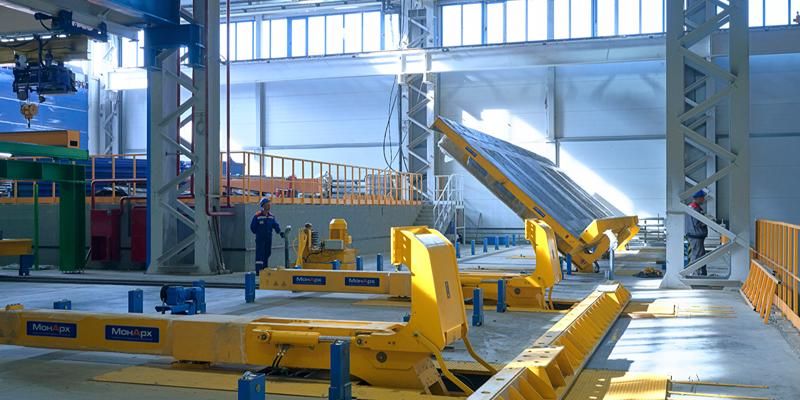
The MonArch Combine of Innovative Technologies manufactures extra-large modules for the construction of various types of buildings in a robotic factory. The prefabricated structures are delivered to site fully equipped with utilities, facades, doors, windows and interior finishing.
This construction method improves energy efficiency, reduces environmental impact and optimizes transport logistics. An electric transfer conveyor is used to move the modules within the plant. Similar structures are already used in the construction of apartment blocks under the housing renovation program. In 2024, the plant became a resident of the Moscow Technopolis special economic zone.


Ecoplast, another resident of the Moscow Technopolis special economic zone, recycles various types of plastic raw materials (office equipment, consumer electronics, computers, phones) into secondary pellets. The process includes machining, separation, drying and granulation and is fully automated. The resulting pellets can both replace primary raw materials and be used as an additive, reducing the environmental impact of production processes.
The plant’s products are used in the production of construction materials, automotive components and the casings of electronic devices.


Ecotechprom, part of the Akron Holding Group, is a high-tech electronic and electrical equipment recycling plant.
The facility efficiently recycles up to 95 percent of incoming raw materials, including office equipment and machinery. It is equipped with specialized production lines for the recycling of refrigerators and televisions using electron beam devices. As a result, valuable materials are recovered. These include polystyrene and propylene fractions, precious metals, ferrous and non-ferrous metals, and glass and fuel additives.

Parus Electro is a Moscow-based manufacturer of power and converter equipment. The company is the leading Russian manufacturer of charging stations for electric vehicles, and its products form the basis of the Energy of Moscow project (which runs more than 1,800 stations across Russia, from Yuzhno-Sakhalinsk to Kaliningrad).
The company is also a leading producer of electrical equipment for renewable energy facilities. 31 Russian solar power plants, with a total capacity of more than 600 megawatts, are equipped with inverters manufactured by Parus Electro.
In 2024, the company developed the first Russian-made inverter for solar energy with a capacity of 1.5 megawatts and an efficiency of 98.8 percent and set up its mass production, and also created the first Russian controller for solar power plants.
This year the company has implemented the technology required to produce equipment for wind power generation and is currently finalizing the development of new energy storage systems. They will be installed for the first time in the Southern Federal District of the Russian Federation in 2026.
“The expansion of the production of electrical equipment for renewable energy was made possible thanks to a preferential investment loan of 1.5 billion rubles, obtained with the assistance of the Moscow Fund for Support of Industry and Entrepreneurship,” wrote Sergei Sobyanin.
With this money the company purchased a production complex of about 25 thousand square meters in the Biryulevo East district. Additional workshops will be opened there for the production of uninterruptible power supply systems, charging stations for electric vehicles and converters for renewable energy.


Galvent is the leading Russian manufacturer of garbage chutes, and its market share in the national construction market now exceeds 70 percent. The company has introduced an innovative system of separate waste collection: a rotary mechanism directs waste to the right containers.
The new system can be integrated into both new and existing buildings in the capital, and also connected to a smart home system to monitor the filling of containers. The introduction of the technology will make it remove rubbish container areas from residential courtyards, optimize space and improve the quality of the urban environment.


Moskabel Plant contributes to the reduction of greenhouse gas emissions. Now the company is developing an innovative aluminum alloy. It reduces copper consumption by 80 percent and reduces the carbon footprint of each kilometer of cable by 50 percent per year.
The enterprise participates in the Clear Sky project, which is successfully being implemented in Moscow. The wires from the streets are being buried underground, and the use of aluminum alloy can reduce the cost of all work by up to 30 percent.

Vtoraluminproduct Industrial Company has been processing scrap metals and electronic equipment since 1996. It is also developing a new area of activity: recycling of plastics and production of innovative plastic products including polymer-sand manholes (lightweight, durable and corrosion-resistant) and plastic sheets for the manufacture of street furniture and small architectural forms, boats and technical parts. From 2015 to 2020, the organization actively worked on the environmentally friendly and efficient decommissioning of old metro carriages, an important step towards modernizing one of the world’s largest transportation hubs.

VEKA Rus is implementing the project “Waste-free economy: recycling of polymer waste,” aimed at working with technological waste materials and faulty window frames.
The process involves three steps: collection of waste materials from partners, preparation of granulate and manufacture of new products. The plastic obtained from the recycled materials is used for the production of window and door frames and is classified as Class A, the highest class, not inferior in quality to plastics made from virgin material. Recycled raw materials can account for up to 70 percent of the composition of internal frame elements, and some articles are made entirely from recycled plastic.

Variata manufactures galvanized and stainless steel shelving that is resistant to corrosion, moisture and wear. They do not require frequent replacement, thus reducing overproduction and as a result environmental impact. The steel and brass used to create the products can be remelted many times without loss of quality.
The company uses high quality raw materials left over from the production of larger products, adhering to three principles: long service life, 100 percent recycling and waste-free production processes.
The company’s products were presented at the Moscow Week of Interior and Design. This exhibition has become an effective platform for promoting the company’s products.


Viki Vostok manufactures stationery and other products entirely from recycled raw materials. The company produces ballpoint pens, notepads and bag clips from recycled materials (Tetra Paks, toothbrushes, recycled polyethylene terephthalate and acrylonitrile butadiene styrene).
The company implements full-cyclical projects for businesses: organizations turn in waste and receive eco-friendly products made from it for use in their offices and events. Among the unusual products presented at VDNKh is an eco-chess set made from recycled milk bags, the color scheme of which corresponds to the city’s containers for separate waste collection.

Moscow’s industrial sector preserves natural resources and creates new opportunities for the development of green technologies, confirming that environmentally friendly production is not just a trend, but a prerequisite for the sustainable future of the megacity.