Vladimir Putin and Sergei Sobyanin have opened a multidisciplinary complex at St. Vladimir’s Hospital
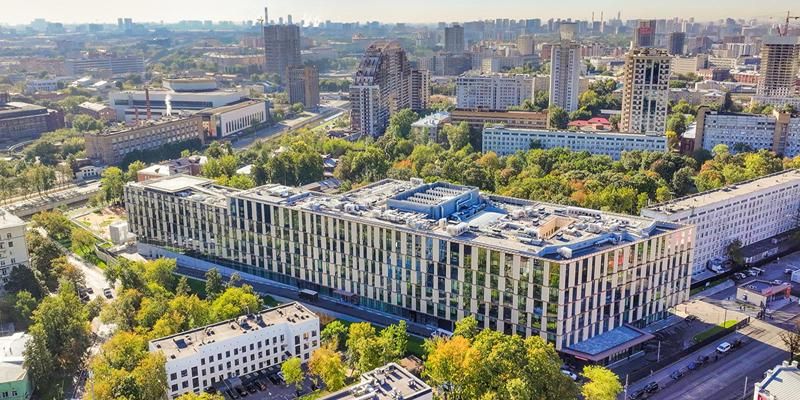
As part of the City Day celebrations, Russian President Vladimir Putin and Moscow Mayor Sergei Sobyanin opened a new multidisciplinary complex at St. Vladimir’s Children’s City Clinical Hospital (CCCH) on September 13.
“Today we are opening St. Vladimir’s Children’s Hospital—one of the oldest in Moscow. Next year is the 150th anniversary of this hospital, an important anniversary. I hope that by then the staff will have already moved in and will start treating patients in the new building which we are opening today,” said the Mayor of Moscow.
Sergei Sobyanin noted that by 2030 the Moscow City Government plans to complete the creation of a new general framework for the city healthcare system, including the city hospitals.

Women’s health centers
Eleven women’s health centers have been opened in city hospitals operating in accordance with the new standard for outpatient obstetric and gynecological care. In these facilities women can receive specialized medical care throughout their lives. Five more centers are scheduled to be completed by the end of the year.
Inpatient care
From 2020 to 2030, 32 new hospital buildings and 116 existing hospital buildings are planned to be built and renovated. To date, 21 buildings have been constructed and 73 facilities have been reconstructed under this program.
Among them are such cutting-edge medical complexes as the Moscow Kommunarka Multidisciplinary Clinical Center, Infectious Diseases Clinical Hospital No. 1, and flagship centers located on the premises of the largest multidisciplinary hospitals. These include the V.V. Veresaev City Clinical Hospital, the N.V. Sklifosovsky Research Institute of Emergency Medicine, O.M. Filatov State Clinical Hospital No. 15, the S.P. Botkin Moscow Multidisciplinary Research and Clinical Center, N.I. Pirogov State Clinical Hospital No. 1, the V.M. Buyanov State Clinical Hospital, the A.S. Loginov Moscow Clinical Research Center, and the new multidisciplinary complex of St. Vladimir’s Hospital.
The construction of new buildings of Moscow City Oncology Hospital No. 62 in Skolkovo continues. The construction and reconstruction of buildings of the N.V. Sklifosovsky Research Institute of Emergency Medicine, the V.P. Demikhov State Clinical Hospital, the Morozov State Children’s Hospital, and the Moscow Clinical Research Center (Hospital 52), among other facilities, is also underway.


The new complex of St. Vladimir’s CCCH
The new complex of St. Vladimir’s Children’s City Clinical Hospital welcomed its first patients on September 13. It is one of the largest healthcare projects under the Moscow Targeted Investment Program.
It is the third super-modern children’s hospital to be built in Moscow. Earlier work on a similar scale was carried out at the Morozov Children’s Hospital, and children’s quarters were also built at the Kommunarka Hospital. The construction of another multidisciplinary pediatric hospital is in the pipeline.
The new six-storey complex of St. Vladimir’s Hospital, including two underground floors, has an area of about 58,000 square meters, and was built using energy-efficient materials and technologies, and incorporating modern solutions for the arrangement of translucent structures and architectural illumination.
Building Information Modeling (BIM) technology was used during the construction. Thus, to scan the facility from the air, a high-tech drone with a set periodicity of departure was used, while a laser electronic total station was used for ground scanning. The resulting point clouds were visualized in the information system of the digital twin, which allowed the systematic evaluation of any deviations from the plan.
The combination of BIM, drone measuring and the digital twin helped provide objective data at all stages of the project, from planning and construction to final operation. This both helped to speed up construction and ensured the high-quality monitoring of construction and installation works.
One of the building’s features is a diagonal facade along Matrosskaya Tishina Ulitsa. The first floor is made of stained glass. The facade has rusticated pylons made of aluminum and painted to look like natural stone.
Three glass atriums have been created in the structure. The height of each is more than 30 meters, and the total area of glazing exceeds 3,400 square meters. From the second to sixth floors, the walls are made of stained glass, with access to atrium areas. The panoramic glazing and large windows maximize the amount of natural light, reducing the need for artificial lighting.
In addition, the floors are designed with open passageways that offer views of the hospital’s central lobby. The large interior spaces and a bright lobby with a glass roof make the new building one of the most beautiful and welcoming medical facilities in Moscow.
The internal layout of the complex is designed to meet modern demands in terms of medical logistics. All types of diagnostics and therapeutic procedures are performed under one roof, thus avoiding the need to transfer patients to other hospital buildings.
The interior decoration is based on the theme of the four elements. In order to put young patients at their ease, a large open-plan entrance area was created, and near the building are placed art installations made of recycled plastic in the form of animals, including a funny orange giraffe.
There is a helipad on the roof of the hospital, which will allow the delivery of patients in a critical condition, who will then be sent to the shock room or emergency operating room.
Depending on the severity of their condition, patients who are hospitalized by ambulance crews will go straight to the emergency room or intensive care unit, where a new standard of emergency care has been introduced. For diagnostics, the doctor-to-patient model, whereby the doctor comes to the patient rather that vice versa, is used. A warm vestibule with space for four vehicles is provided for arriving ambulances, enabling patients to be unloaded in comfortable conditions in any weather.
The new building is designed to have 570 beds. The hospital has also introduced short-term and day care inpatient technologies.
Young patients will be accommodated in comfortable wards which contain everything necessary for a child and mother to stay together, and there are also teenage wards, where older children can stay independently. In particular, there are beds for mothers, and each room has a bathroom, shower and TV.
The complex is equipped with numerous play areas. As in the new building of Morozov Children’s Hospital, there are rest areas for parents on all floors. There are also separate areas on each floor for patients to communicate with doctors. Special relaxation areas are also set aside for medical staff.
A clear navigation system will make it easy for patients to find their way around. The building has a barrier-free environment for people with limited mobility.
The surrounding territory has been equipped with a playground and benches for resting, and garden areas have been planted.
In 2023, the project won a Moscow City Architecture and Town Planning Award in the category “Best architectural and town-planning solution for a healthcare and public service facility.”
More than a thousand medical and other specialists will work in the new complex of St. Vladimir’s Hospital. There are 20 inpatient departments, including the leading departments of the hospital: maxillofacial, thoracic and vascular surgery, neurosurgery, trauma and orthopedics and uroandrology, among others. A transfusiology department will also be opened in the hospital.
“The hospital will have 20 wards with state-of-the-art equipment. Among them are the department of transfusiology and a unique gravitational blood surgery and hemodialysis center, where kidney replacement therapy can be performed, including on newborns,” Sergei Sobyanin wrote on his channel in the messenger MAX.
Source: Sergei Sobyanin’s channel in the messenger MAX
The latest medical equipment has been purchased for use in the hospital complex, including two MRI and two CT scanners, six stationary and seven mobile X-ray diagnostic complexes, six C-arm X-ray machines and an angiograph.
For surgical interventions, 15 ultramodern operating theaters have been equipped, including nine general surgical operating theaters, a hybrid angiography theater and five small operating theaters. Operations of any level of complexity can be performed in them.
The complex will have clinical diagnostics, bacteriological and pathomorphological laboratories. This will significantly expand the range of available studies necessary for diagnosis and for the selection of optimal treatment tactics for patients.
St. Vladimir’s Hospital serves as a clinical base for 10 departments of leading medical universities. Accordingly, the new complex has been provided with special auditoriums and training halls for theoretical and practical classes.
Computers connected to the unified medical information and analytical system are installed in the consultation rooms of medical staff. The building is also equipped with video surveillance, ventilation, air conditioning and other technical systems.
The hospital will operate on the principle of a digital hospital, in which all information about the diagnosis and treatment of patients is processed electronically, without duplication on paper. Parents of patients will be able to follow their child’s treatment online by logging into their electronic medical record.
One of the oldest children’s hospitals in Moscow
St. Vladimir’s Children’s City Clinical Hospital was founded in 1876. Today it is one of the largest multidisciplinary pediatric hospitals in Moscow. The main buildings are located in the Sokolniki district at 1/3 Rubtsovsko-Dvortsovaya Street,—on the right bank of the Yauza River (Rusakovskaya Embankment).
The hospital has 784 beds (544 on the main site and 240 in the branch), 24 of which are intensive care beds.
Every year about 100,000 children are treated at St. Vladimir’s Hospital, about 40,000 in the 24-hour inpatient department, and more than 60,000 receiving specialist consultations on an outpatient basis.
The specialists at St. Vladimir’s Hospital provide care in 15 fields of medicine.
For the first time in Russia, unique surgeries have been performed here to treat congenital bladder malformations, as well as compression-distraction osteosynthesis (treatment of skeletal deformities) of the lower jaw in patients with developmental conditions. In addition, the hospital has acquired considerable expertise in renal replacement therapy, including for young children.
The hospital has five unique units providing specialized medical care to children and adolescents: a center for gravitational blood surgery and hemodialysis, and departments specializing in maxillofacial surgery, thoracic surgery, urology-andrology and surgery to treat superficial vascular diseases.
The branch located in Moscow region provides assistance to patients with pathologies of the musculoskeletal apparatus, and conducts rehabilitation after complex reconstructive surgery and traumas.