More than 50,000 events were held as part of the Moscow 2030 forum — Sergei Sobyanin
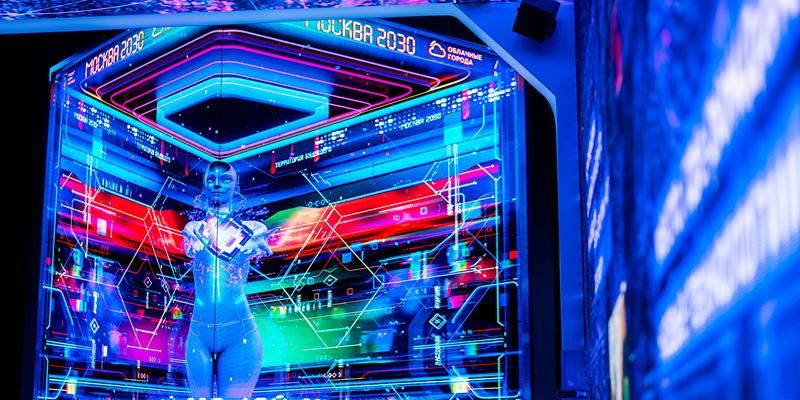
The Territory of the Future. Moscow 2030 forum was visited by more than 14 million Moscow residents and visitors to the city. The news was reported by Sergei Sobyanin in a post on his blog.
At the events of the forum it was possible to learn about the implementation of Moscow’s development strategy, which was approved last year. It covers urban planning, transportation, industry, medicine, education, culture, entrepreneurship, sports, ecology, urban economy, the creation of comfortable environment and many other aspects of life in the capital.
More than 50,000 educational, outreach and cultural events took place over 45 days at 11 main venues.
At festival sites throughout the capital city, the Moscow Helps project organized Houses of Kindness to collect humanitarian aid for participants of the Special Military Operation (SMO) and residents of the new regions. Children were given sweets, toys, books, board games and educational items. Personal hygiene products, insoles and socks were provided for SMO participants.
“The success of the forum is the result of tremendous work by the Moscow City Government team and our partners. Thank you to everyone who contributed to this great event. Each location and event of the Territory of the Future. Moscow 2030 forum demonstrated the impressive potential of the capital and the significant steps that have already been made on the way to transforming it into the best city on earth,” Sergei Sobyanin noted.
The person of the future
The main topic of the forum was the Person of the Future. At all sites there was an active dialog with young people, who will have to decide what Moscow will become and implement the most daring ideas and projects. More than a third (38 percent) of forum participants were between the ages of 18 and 34.
Visitors to the forum could vote for their favorite sites in the Active Citizen project. Among the most highly rated venues were the spaces in Gostiny Dvor, Zaryadye Park and the Manezh Central Exhibition Hall. More than half a million people visited the exhibition Infinite Development with Eternal Values held in Gostiny Dvor.
Moscow residents and visitors to the city gained first aid skills, discovered the advanced technologies of the capital’s health care system and tested innovative training equipment and simulators, which can be used to practice various medical procedures, including gastroscopies, ultrasound scans, and cardiovascular diagnostic procedures.
In the Moscow colleges zone it was possible to try out professions of the future and see in action advanced developments in the field of biomechanics, neurointerfaces and artificial intelligence. Interactive installations and lectures by experts helped visitors understand how a careful attitude to oneself, loved ones and the city itself cam shape a sustainable future.


That very Moscow
Public transport, urban planning and industry in the city of the present and future were discussed at the exhibition That very Moscow at the Manezh Central Exhibition Hall. Covering an area of 11,000 square meter, the exhibition included more than 10 themed spaces dedicated to different aspects of the capital’s development. The displays presented innovative solutions that will change the life of the city. For Moscow residents, these are already part of every day life.
Major achievements include a growing metro system, record rates of infrastructure construction, the world’s largest housing renovation program, the Moscow Technopolis special economic zone and advanced industrial technologies.
Visitors were able to see how Leningradsky Railway Station will look like after its large-scale modernization. They could immerse themselves in the 90-year history and future of the Moscow Metro, learn about with the plans for the development of the rail track system for the period until 2030 and about the new generation turnstiles. The history of the capital’s river transport was presented in the format of a 5D journey along the Moskva River.
In addition, the forum gave visitors the opportunity to try out the professions of builders and designers, including experiencing the work of a tower crane operator or watching the transformation of housing under the renovation program in just 15 seconds. More than 50,000 visitors took part in this activity during the exhibition.
More than 1,600 visitors were treated to an innovative prefab show that demonstrated how modern construction technology speeds up home construction by 30 to 50 percent.
The installation Path Through the Industrial Zone showed how abandoned industrial areas are being transformed into modern urban spaces. After passing through mazes of concrete fences, visitors entered a stylized elevator that transported them from the past to the future. During the entire period of the exhibition, the “time elevator” traveled 3,168 floors.
In the Moscow’s New Industry zone visitors learned about the modern production ecosystem of the capital. Today there are more than 4,500 industrial enterprises operating in the city. Each facet of a giant Rubik’s cube portrayed a variety of manufactured products, from food to drones to nonwoven textiles.
The visitors to the exhibition learned how the Moscow Technopolis special economic zone will be developed and saw interactive models of the largest production sites. For example, by 2030 the area occupied by industrial and business infrastructure on the site of the Alabushevo SEZ, home to enterprises in the microelectronics, photonics and pharmaceuticals sectors, will increase by a factor of 2.7 times and reach 900,000 square meters.


The future of urban services
At the municipal economy site in the Luzhniki sports complex visitors could learn about the city’s life-support systems and experience the job of a utility worker.
Visitors to the indoor pavilion participated in interactive workshops on neighborhood design, restoration and determining drinking water quality. They attended talks in which they learned interesting facts about bridges, fountains and embankments, immersed themselves in the history of the city’s street lighting and water supply, and learned how heat, electricity and other resources are transported into the homes of residents. They also had the chance to acquire waste sorting skills and learn about modern landscaping standards.
The exhibition of special equipment, including the latest models of municipal services and fire and rescue machinery, was also extremely popular.


Moreover, in the Moscow Control pavilion in Luzhniki, visitors were informed about the benefits of careful consumption and the greening of the capital. A virtual assistant introduced them to the work of inspectors of the city monitoring services, and they could see how the monitoring officials of the future will work.


Science of the future
For the first time, the new campus of Bauman Moscow State Technical University was one of the forum’s central venues. This was a key site for young people who have decided to connect their future with the creation of new technologies.
It hosted over 320 educational events, including lectures on technology, science and urbanism with renowned experts. Among the speakers were more than 400 scientists, science popularizers, and bloggers. In addition, there was a Laboratory of the Future, which hosted 120 master classes for children and teenagers dedicated to different professions. And the congress hall hosted business events and public talks.
Visitors viewed digital exhibitions and the VR-zone, learned about digital plant doubles, created a musical composition from industrial sounds, asked questions to the interactive AI character Tolik vol.3 and tested video games.
The media installation Assembly Point 2030, a prototype of a quantum computer, was also popular. Every day visitors to the site left messages about the Moscow of the future in interactive capsules, and in the evening the neural network collected them into a single visual stream. The site also had a main stage, where educational lectures and performances by popular artists were held.


Economy and professions of the future
In the Muzeon Art Park visitors were able to discover what powers the capital’s economy, how it develops and how the city introduces new digital services. More than 300 lectures, meetings, open dialogues and other events with the participation of government officials, economists and businessmen took place in the Economy of Moscow pavilion, where topics related to economics, personal finance, careers, entrepreneurship and many other issues were discussed.


The Moscow Digital Technologies pavilion was visited by hundreds of thousands of people. Visitors to the pavilion went on an interactive journey, The Way of the IT Hero and learned about some of the capital’s high-tech projects and about various IT professions. In a game format they were able to learn about the work of a programmer, game designer, geo-analyst, data marker, tester, prompt-engineer and other specialists who create digital projects for the benefit of the city and its residents.
More than 350 different events took place on the stage of the pavilion, including educational lectures, master classes and quizzes, and the central event was the open-air competition Park.Code // Mos.Hub held on Programmer’s Day. This event brought together dozens of developers, testers and IT enthusiasts.


In the Art of Building multimedia pavilion visitors to the forum watched the immersive show Flight over Moscow, learned about architecture in the lectures given by the bureau Moscow Through the Eyes of an Engineer, mastered the technique of rapid drawing in a master class on urban sketching and sketched iconic sites in of the capital. The techniques and technologies that are used in the urban planning industry on a daily basis were demonstrated in an interactive performance.


Latest technologies
Visitors to 50-letiya Oktyabrya Park had the chance to develop plans in the field of space exploration. At this site they could discover technologies of the future and how many of them are becoming part of everyday life in Moscow.
The Space pavilion, with its models of spacecrafts, robotic astronauts, humanoid machines and robot dogs took center stage.
The Biome Pavilion is a model of a sustainable city in which water, plants and engineering come together in a cohesive system. The centerpiece of the exhibition was an artificial river that could be navigated by paddleboard or kayak.
The Robotics Pavilion combined exhibition areas, science shows and rides. Here, bolts of lightning bolts were incorporated in to a musical score.


Unmanned systems
The Skolkovo Innovation Center hosted the first Unmanned Systems: Technologies of the Future international forum. It attracted over 260,000 participants from more than 60 countries.
One of the main events of the forum was an exhibition of robotic systems, which brought together more than 700 high-tech exhibits from 24 regions of Russia. Over 300 companies presented applications of unmanned systems in eight key areas of the economy: agriculture, forestry, construction, fuel and energy, security, trade, transportation and the urban economy.
“The national drone competition held during the Archipelago 2025 project-educational intensives could be fairly described as sensational. Visitors watched the world’s first chess tournament between autonomous swarms of drones and a demonstration of unique flying devices with obstacle avoidance capabilities, and they also watched microdrone competitions,” Sergei Sobyanin wrote.


In addition, pilots from 11 countries competed in the Moscow Mayor’s Cup in drone racing. Danil Gryaznov and Kirill Loban from Belgorod region came first in the main discipline Class 330-team scoring.
Career of the future
In VDNKH there were also events focused on career opportunities A career weekend was held in the Nastroyenie-Moscow space near the Sun of Moscow Ferris wheel. Experienced recruiters from the Moscow City Government’s Human Resources Services Department helped job seekers to adjust their resumes and find opportunities for professional growth, gave advice on searching for jobs, and talked about possible career trajectories in the capital’s team.


On August 23 a Career Night was held in the Lomonosov innovation cluster. In an informal atmosphere more than 3,400 motivated and talented young people talked to employees of the Moscow City Government and determined for themselves whether they want to become part of the team in the future.

Sport of the future
The Luzhniki sports complex has become Moscow’s leading sports venue. Each week the complex focused on a different area, from traditional sports to cyber and phygital disciplines. Weeks of tactical shooting, soccer and other sports demonstrated how virtual reality can complement physical activities in the future.
The Luzhniki complex hosted 19 themed zones, from a fitness center and extreme sports park to an outdoor ice rink and padel courts. Large-scale events were held here, including Athlete’s Day celebrations and the Sports Weekend.


A sports festival was also held in the Krasny Oktyabr art cluster. A unique parkour platform, Person of the Future, operated on the site of the Moscow municipal economy complex. All visitors had the chance to test their strength and endurance, and try their skills as urban planners by creating their own plan for the site layout.


Art of the future
Zaryadye Park was the main cultural venue of the forum. Over a period of seven weeks, more than five thousand artists from 27 countries performed there.
The large amphitheater of Zaryadye Park hosted daily concerts of symphonic music and poetry recitals, plays and audiovisual performances combining classical music, light, video content and special effects.


Among the performers at the venue were soloists from the Bolshoi Theater, the K.S. Stanislavsky and V. I. Nemirovich-Danchenko Moscow Academic Musical Theater, and from leading Russian creative ensembles, including the Russian Philharmonia Moscow Symphony Orchestra, the Novaya Rossiya State Symphony Orchestra, the new Moscow Festival Orchestra and many others.


In addition, audiences were able to learn about the history of musical works and learn about their composers, and participate in activities dedicated to preserving the memory of the Great Patriotic War.


The summer concert series took place as part of the Mosproducer Showcase 2025 project. The 16 winners presented their own compositions in current musical styles and celebrated the project’s 11 th anniversary on the main stage. In addition, Zaryadye Park hosted a concert to mark the end of the Street Artist in Parks project.


Zaryadye Park’s largest media facade, with an area of 250 square meters, served as the venue for the Digital Footprint exhibition. It presented the works of the winners of the art project organized by the Moscow Production Center, dedicated to rethinking the image of the capital from the point of view of innovative technologies.


In the exhibition Historical Moscow in the Findings of Archaeologists, in the Old English Court, visitors could learn about the everyday lives and crafts of the capital’s inhabitants in different epochs More than 100 unique artifacts from the 12 th-19 th centuries were exhibited there for the first time.


In Zaryadye Park the pavilion and small amphitheater hosted a financial literacy marathon, with the participation of experts and media personalities. It was attended by about 87,000 people. They mastered the financial skills necessary in today’s world and learned how to plan a household budget, protect personal data and money from fraudsters, create a financial safety cushion and invest.


“Zaryadye Park was not the only venue buzzing with cultural life. Portal 2030–2050, a huge electronic music event, took place on the territory of the Moskino Film Factory, with 110 DJs from 13 countries performing,” wrote Sergei Sobyanin.
Photos from the forum venues were collected on the Pulse of the Capital section of the Active Citizen website. The pictures that get the most likes will be put to a citywide vote in late September. Based on the vote, the three best works will be chosen, and their creators will receive points in the city’s Million Prizes loyalty program.