Sergey Sobyanin wries about interesting finds by Moscow archaeologists
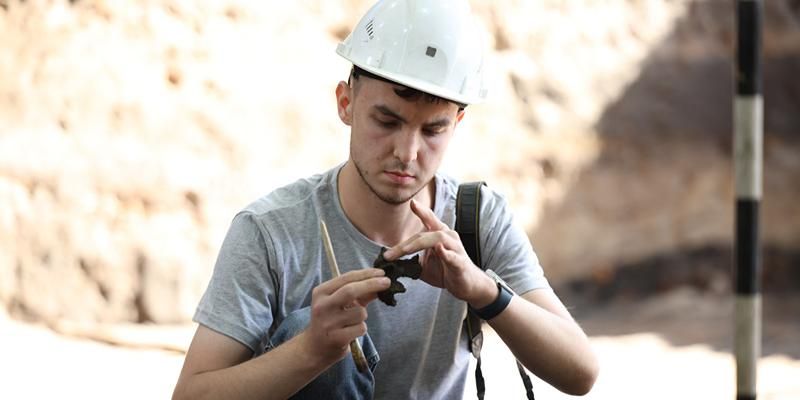
The central part of Moscow, as well as many other parts of its territory, is an extremely rich source of knowledge about the past of the city and the country as a whole. This heritage is carefully protected and studied. Sergei Sobyanin has written on this subject in a post on his blog.
An assessment of the area’s archaeological potential is required before excavation work begins. If necessary, excavations are started.
“Since 2010 alone, Moscow’s archaeologists have uncovered more than 120,000 individual finds. The oldest finds date back to the 12 th and 13 th centuries, and are thus contemporary with the foundation of our city. Last year, archaeological work was carried out on more than 200 sites, covering 15,400 square meters, twice as much as in 2023. During the excavations, a record number of finds, more than 13,000 individual items, were unearthed,” shared the Mayor of Moscow.


Archaeologists will have no less work in the new season. They will survey over 200 sites in the Tagansky, Presnensky, Basmanny, Zamoskvorechye, Khamovniki, Krasnopakhorsky, Bekasovo and Shcherbinka districts of the city. The total excavation area will be at least five thousand square meters.
Archaeological work began last year in Kitaygorodsky Proyezd, on the site of an 18 th-century earthen bastion and an educational institution that was built there in the 19 th century will be continued. Specialists will also work on four sites: two on Yauzskaya Street (the 17 th-century Semyonovskaya Sloboda and the city estate that housed the Yauzskaya Hospital in the second half of the 19 th century); one on Timur Frunze Street (the 17 th-century Khamovnaya Sloboda); and one in Soymonovsky Proyezd (the 14 th-17 th-century village of Semchinsky).
Excavations are underway in Maliy Kislovsky Lane, Luzhnetsky Proyezd and Nikolskaya Street.
New excavations include sites on Baumanskaya, Polyanka, Bolshaya Ordynka and Bolshaya Nikitskaya Streets and Pyzhevsky Lane.
“By the way, work continues on many excavations in the winter. Special greenhouses prevent the ground from freezing. As a result, the finds discovered so far in 2025 already amount to more than 4,300 artifacts. Most of these are shards of pottery and glass, but there are complete finds as well. Among them is a red-framed 16 th-century Dutch-style tile with a complex, ornate ornament that was found on the territory of the Chizhevsky estate on Nikolskaya Street. Each of these tiles is an important find that opens another window into the world of medieval art,” wrote Sergei Sobyanin.

Ceramic confectionery molds from the 19 th century in the shapes of flowers, cones, and probably bows were found on Shlyuzovaya embankment. They were most likely used to make cookies or candy. Just as with consumers today, those in the 19 th century demanded a wide variety of desserts, which stimulated the creativity of confectioners.

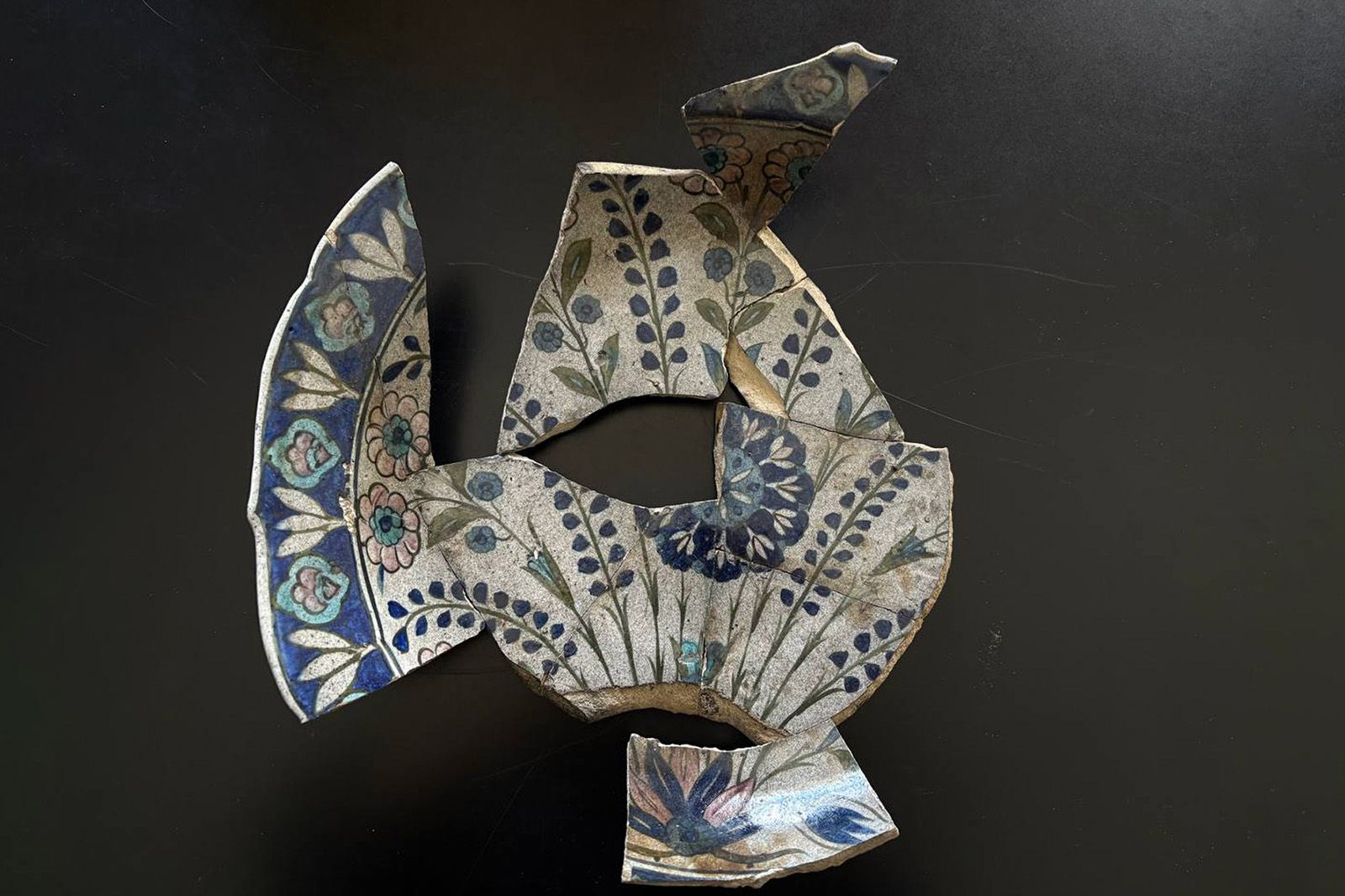
Another curious find from the territory of the Chizhevsky estate is a 16 th-century serving bowl from Turkey. The artifact is decorated with a plant ornament and a bouquet of blue flowers that resemble carnations and what are possibly sprigs of lavender. This dish vividly exemplifies trade relations between Russia and the Near East.
In Romanov Lane, at a depth of four meters and inside the perimeter of a building burned many centuries ago, several bells made of non-ferrous metal were found. They date from the second half of the 16 th century or the early 17 th century. They were likely hidden before Tatar Khan Devlet I Giray’s assault on Moscow in 1571 or the Polish intervention in 1609. During the winter, restorers thoroughly cleaned the bells’ interiors and exteriors, and they now look immaculate.

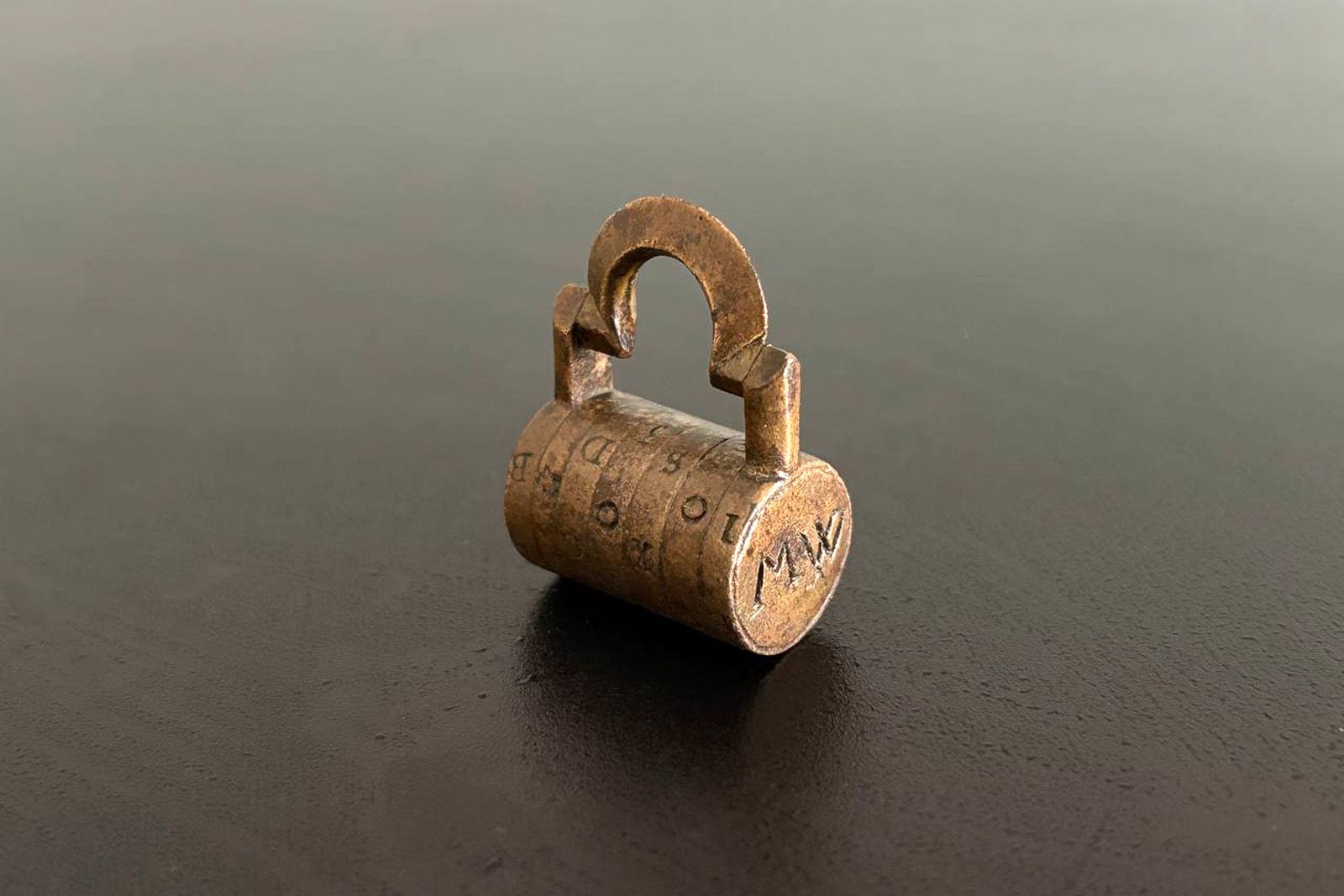
Also found in Romanov Lane was a cylindrical code lock made of non-ferrous metal dating back to the second half of the 17 th century. It consists of seven disks labeled with the Latin letters C, E, X, G, and D, and the most interesting feature is the two Latin letters MW at the end. They may be the monogram of the owner of the bells or the owner of the estate where the archaeological research was conducted. It could be the regimental doctor Ulf, but that remains to be confirmed by further research.
“As usual, all finds will be carefully restored and transferred to the Museum Fund of the Russian Federation as part of the collections. Since the summer has just begun and the main work is still ahead, we can be sure that many more interesting artifacts from the life of past generations of Muscovites’ lives will be discovered this year,” Sergei Sobyanin concluded.