Sergei Sobyanin: Moscow’s public transport has won a record number of prestigious awards
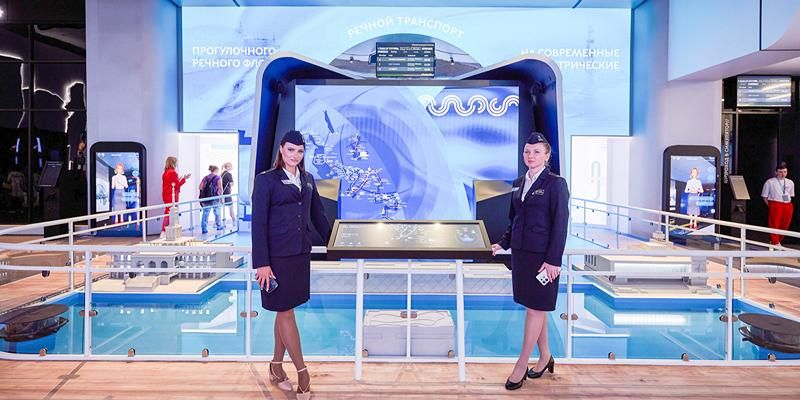
A meeting of the Presidium of the Moscow City Government discussed the development of the capital’s transport industry, the participation by its representatives in international projects and summits, and the organization of exhibitions on related topics.
International cooperation
The capital continues to actively cooperate with foreign countries on the development of public transport. For example, the Moscow City Government has started to develop joint projects with the Republic of Cuba, including the organization of taxi services and the commercial sale of Moskvich cars.
Also under development is the Urban Transport Data project, which will involve the creation of an international analytical platform for the collection, analysis, visualization and publication of transport indicators in the world’s largest cities. So far, 15 metropolitan areas have joined: Moscow, Minsk, Antalya, Bangkok, Vientiane, Manila, Nish, Beijing, Raipur, São Paulo, Cebu, Tashkent, Hanoi, Harbin and Chengdu.
“Last year, the capital hosted the III International Transport Summit, which brought together a record number of participants: representatives of 30 cities, 110 foreign delegates and 250 guests,” Sergei Sobyanin wrote on his Telegram channel.
Source: Sergei Sobyanin’s Telegram channel @mos_sobyanin
There were 55 speeches in the Summit’s business sessions. As a result, 10 international documents were signed. There are plans to add an industry-related sessions to the event’s program in 2025.
In addition, last year Moscow’s public transport system won a record number of victories, winning 83 prestigious awards, including the Green Eurasia Award (electric transport and the Energy of Moscow project in the Green Transport category), the Digital Leaders Award (the ticketing system in the Service of the Year category and the integrated traffic management system in the Product of the Year category), the Best for Life Design Award (Green Ring bicycle route in the Design Project of the Year category), and the Global Design iT Award (Moscow-2024 metro train for industrial design).
Moscow public transport exhibitions
In August-September 2024, the exhibition Manege Station. Moscow Public Transport—2030 was organized as part of the Territory of the Future. Moscow 2030 festival and forum.
“The exhibition was the most visited in the history of the Manege Exhibition Center. In 2024, it was visited by more than 357,000 people,” added the Mayor of Moscow.
The exhibition, covering 9,000 square meters, with 20 interactive zones, was dedicated to modern urban public transport and the program for the development of the transport system until 2030. In particular, the Manezhnaya Square depot (in front of the entrance to the Manege Exhibition Center) hosted a display of the latest rolling stock: Ivolga 4.0 and Moscow-2024 trains, an electric bus manufactured by KAMAZ PTC and a model of the leading first class carriage of the Bely Krechet Russian high-speed train for the Moscow-St. Petersburg high-speed railroad (HSR-1)—a project proposed by Russian President Vladimir Putin.


The largest collection of historical urban transport machinery is possessed by the Moscow Public Transport Museum. Its collection contains more than one thousand exhibits and over 20,000 archival documents, books and printed publications.
In 2024, six exhibitions, 10 special projects and many excursions and educational programs were organized at the museum’s sites at VDNKh (Pavilion 26) and in the Northern and Southern River Stations. In total, more than 500,000 people visited the museum’s events during the year.
By the end of 2025 the permanent exhibition of the Moscow Public Transport Museum will be opened in the garage designed by Konstantin Melnikov on Novoryazanskaya Street (house 27), a unique building in the Constructivist style. The basis of the exhibition, which will have a total area of about 10,000 square meters, will consist of 53 exhibits: buses, streetcars, trolleybuses, electric buses, special city maintenance equipment, trucks and cars, animal-drawn transport and motorcycles, as well as models of vintage machinery restored by the museum’s staff, and many other exhibits.
They include unique pieces not found in other public transport museums or private collections open to the public:
- a unique 1872 horse-drawn tram, restored, with the original chassis;
- tram carriages mounted on Becker F and BF bogies (the BF carriage is one of only two surviving in the world);
- a KIM-10-51 saloon car, one of the five surviving vehicles of this brand and the only one in complete running condition;
- a SVARZ crane platform (only six were produced, of which only two have been preserved);
- a GAZ-AA one-and-a half ton capacity truck, which took part in the fighting near Istra during the Great Patriotic War;
- a MAZ-200 truck, which was used in the construction of the Third Transport Ring;
- a SVARZ-TBES-VSKhV trolleybus—the only surviving example of the series of vehicles specially built for operation at the All-Union Agricultural Exhibition (now VDNKh) in 1956;
- a ZIS-154—the first Soviet bus with a diesel-electric transmission, which was produced at the Stalin factory (ZIS) in Moscow;
- a Yauza metro carriage, with a unique engineering design that influenced the structure of all modern Russian trains;
- a Nomernoy carriage (a.k.a. Metrovagonmash 81-717/81-714)—the most common type of Russian metro carriage still in operation in many subways around the world;
- a B carriage from the Berlin Metro, the only surviving eight-door version of this carriage type.
The museum will create a high-tech multimedia space. And the history of Moscow’s public transport will be presented through personal memories and diaries of passengers, among other exhibits.
With the help of modern museum technologies, visitors will be able to learn about the origin and historical development of Moscow’s transport system, including the formation of the ring roads and the development of the highways, chords, flyovers and public transport hubs. In addition, a special interactive itinerary will be developed for young visitors.
In 2025, the first line of the museum’s storage facilities in Krasnaya Pakhra and the Moscow Transport Sports Complex in Alekseevsky District will be ready.