Sergei Sobyanin has approved the priorities for the development of Moscow’s public transport sector
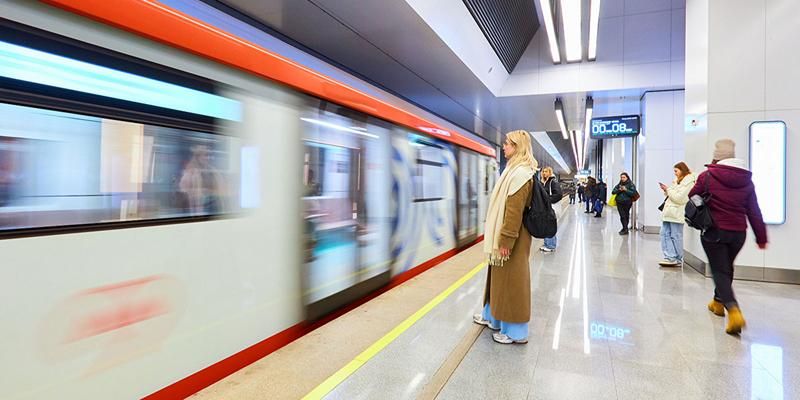
At the meeting of the Presidium of the Moscow City Government the results of the work of the capital’s transport complex last year were considered and the priorities for its development for 2025 were approved.
In his report, Maxim Liksutov, Deputy Mayor of Moscow for Transport and Industry, noted that the main result of the work of the transport complex in 2024 was to improve the mobility of residents and visitors to the city. Last year total passenger traffic increased five percent, by 750,000 trips (from 16.56 million to 17.31 million weekday trips).
Passenger numbers increased across all modes of urban transportation — bringing them almost up to the pre-pandemic level of about 70 percent.
Daily passenger traffic on a working day (millions of trips)
|
Mode of transport |
2023 |
2024 |
Growth in 2024 vs. 2023 |
|
Metro and Moscow Central Circle |
8.07 |
8.20 |
Plus 1.6 percent |
|
Above-ground urban public transport |
4.36 |
4.69 |
Plus 7.6 percent |
|
Railway transport, including Moscow Central Diameters |
2.00 |
2.11 |
Plus 5.5 percent |
|
Taxi |
1.65 |
1.73 |
Plus 4.8 percent |
|
Car-sharing |
0.24 |
0.25 |
Plus 4.2 percent |
|
Personal mobility aids (scooters, bicycles) |
0.24 |
0.33 |
Plus 37.5 percent |
|
Total |
16.56 |
17.31 |
Plus 5 percent |
Moreover, the number of private cars on Moscow’s roads remains stable at 2.8 million vehicles per day. Moscow residents and guests of the capital prefer various forms of public transport for their daily journeys.
On average, a passenger using public transport saves up to seven days a year on travel. For example, since 2010, the travel time from the Moscow Ring Road (MKAD) to the center of the capital has been reduced by 15 minutes.
As a result of the discussion, Sergei Sobyanin approved the priorities for the development of the transport complex for 2025. These included:
- further development of the Moscow Metro infrastructure: opening of four stations on the Troitskaya line (Vavilovskaya, Akademicheskaya, Krymskaya and ZIL stations) and two new electric depots (Stolbovo and Yuzhnoye);
- expansion of the tram network: construction of a new line on Akademika Sakharova Avenue from Komsomolskaya Square to Chistoprudny Boulevard and restoration of the tram line on Trifonovskaya Street to Rizhskaya Square;
- implementation of the third (final) stage of the launch of Russia’s first unmanned tram, which will involve regular and fully unmanned movement of trams, with passengers;
- preparations for the launch of the first unmanned metro train on the Bolshaya Koltsevaya line;
- completion of rolling stock renewal on the Moscow Central Diameters and commencement of train modernization on the Yaroslavl line of the Moscow Railway;
- construction and reconstruction of seven Moscow urban interchanges (Petrovsko-Razumovskaya, Kursky, Moscow-City, Serp i Molot, Zheleznodorozhnaya, Begovaya and Tsaritsyno), and completion of the renovation of Leningradsky Railway Station;
- delivery of 272 Moscow-2024 series carriages, about 650 electric buses, 50 trams and more than 30 Ivolga trains;
- 50% renewal of the train fleet on the Zamoskvoretskaya metro line;
- commencement of full-cycle production of electric river vessels at the world’s most modern shipyard in Nagatinsky Zaton, which has a capacity of up to 40 vessels per year;
- opening of the third regular river transportation route on the Moskva River (Novospassky — ZIL);
- introduction of biometric fare payment at Moscow Central Diameter stations, at all metro turnstiles and above-ground surface public transport;
- further development of the rental of personal mobility equipment (PME), including an additional 3,000 model 2.0 electric bicycles and the pilot launch of new forms of PME (electric scooters and mechanical stationless adult and children’s bicycles);
- expanding the functionality of the Moscow Metro mobile applications (adding Velobike to the range of options, implementing the ability to pay for above-ground public transport, adding new services and improving the existing ones in the City section) and Moscow Transport (improving the user interface and integrating the Take Charge project);
- inclusion of suburban above-ground public transport routes (from the capital to the nearest Moscow suburbs) into the Moscow transport system, currently served by buses running from the region to metro stations within the Moscow Ring Road — travel will become more comfortable and safer for 400,000 passengers.