Moscow is among the three most illuminated cities in the world — Sergei Sobyanin
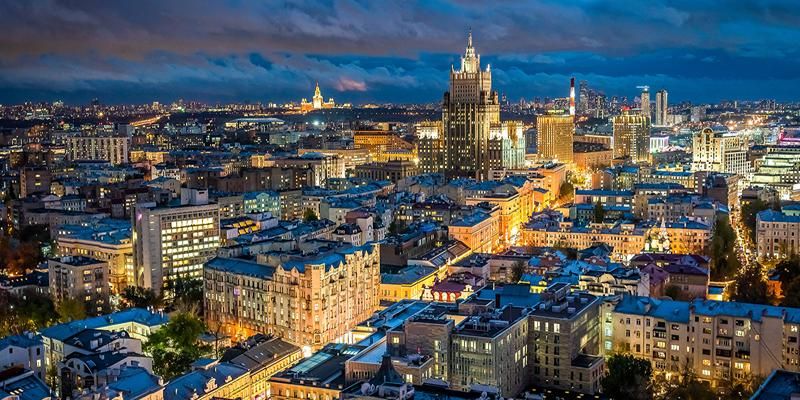
Moscow is confidently among the three most illuminated cities in the world. The capital will continue with its work in this area. The news was announced by Sergei Sobyanin on his Telegram channel.
“Since 2011, the city has installed 478,000 outdoor lighting fixtures. We equip the streets with modern energy-efficient lighting fixtures, introduce smart control systems, thanks to which our control service can remotely adjust the brightness, check the voltage and check whether the lights are lit or not. The number of buildings with architectural and artistic illumination has increased more than four times, and today totals some 2,300. The lighting design of each building is created individually to emphasize the architectural elements,” the Mayor of Moscow wrote.
Source: Sergei Sobyanin’s Telegram channel @mos_sobyanin
Street lighting is the most important factor in creating a comfortable urban environment and ensuring the safety of citizens. Thanks to the lighting, the city continues to live an active and busy life almost around the clock.
The use of modern means of lighting enables the city’s buildings and structures to be decorated in the dark and create a bright image for architectural monument. Festive illumination raises the mood of citizens and attracts numerous tourists to the city.
Since 2011, the capital has been implementing a program to improve street lighting and develop a light and color environment. The new lamp posts are equipped with modern energy-efficient lights, which can reduce electricity consumption by up to 30 percent.
In addition, smart lighting control systems are being implemented. All street lights will gradually be equipped with smart sensors so that the control service can remotely control the lights, including adjusting brightness, checking voltage and monitoring operation.
Over the last few years, the city has installed 478,000 lighting fixtures. Their number has more than doubled, reaching 827,000 pieces (in 2011 there were 399,000).
In 2024, work was done on the installation of 32,000 outdoor lighting devices. As a result, today Moscow has a secure place as one of the three most illuminated cities in the world.
In 2025, the program to improve lighting will continue — it is planned to install more than 32,000 outdoor lighting devices in courtyards, children’s playgrounds and sports grounds.
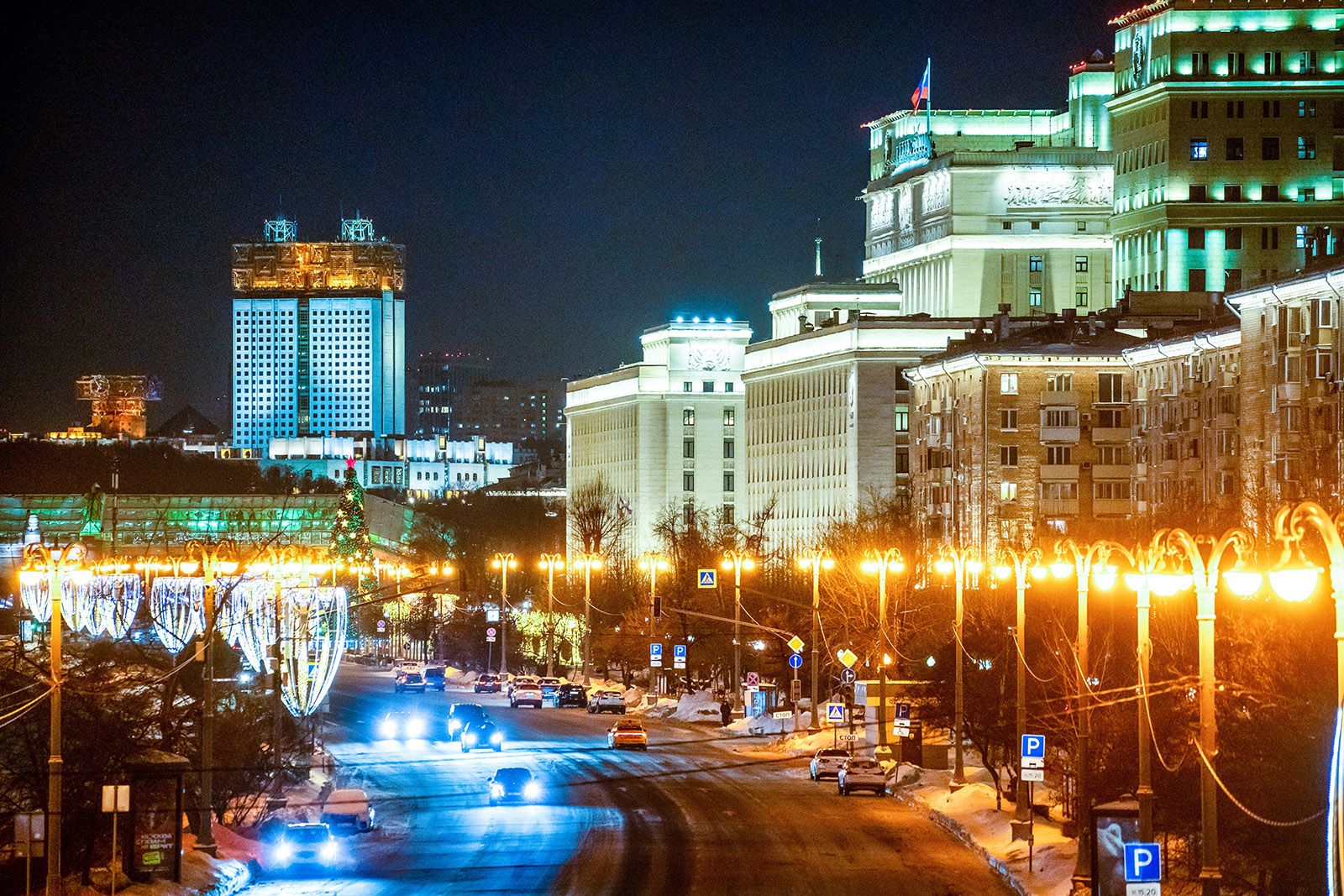


Architectural floodlighting and decorative illumination
Since 2011, the number of buildings and structures with architectural and artistic illumination has more than quadrupled, and now amounts to some 2,300. Among them are buildings located on pedestrian routes and the city’s main thoroughfares, on the embankments of the Moskva River, and on road and transport overpasses and churches.
The lighting design of each structure is unique and is created individually to emphasize the architectural elements. In keeping with the concept adopted, all new lighting provides a warm or neutral shade of white illumination of moderate brightness.
There are also some very special projects. For example, 23 bridges over the Moskva and Yauza Rivers were decorated according to the theme of gemstones and the streets of the Garden Ring are illuminated in shades of gold.
In 2024, 83 structures were decorated with architectural and artistic illumination. These include the S. V. Obraztsov State Academic Central Puppet Theater on Sadovaya-Samotechnaya Street, the G. M. Krzhizhanovsky Memorial Apartment Museum on Sadovnicheskaya Street, Zhivopisny Bridge and the Druzhba universal sports hall in Luzhniki.
For example, more than 400 LED lighting devices with a capacity of 150 to 200 watts were installed inside and at the base of the cable-stays of Zhivopisnaya Bridge. The lighting is a warm and neutral tone of white, to mimic natural light. The famous and now reconstructed shell-shaped building in Luzhniki — the Druzhba Universal Sports Hall — was equipped with dynamic illumination which allows the lighting scheme to be changed.
On the building of the S. V. Obraztsov State Academic Central Puppet Theater lighting devices were installed on the upper part of the perimeter of the facade to emphasize the avant-garde style of the cubic structure. On the facade of the Russian neo-Classical mansion from the first third of the 19 th century, which houses the G. M. Krzhizhanovsky Memorial Apartment Museum, illumination is used to highlight the main entrance, balcony and windows.
A beautiful lighting project has been created in the Church of the Nativity of the Blessed Virgin Mary on the Krylatskie Hills, where the protruding architectural details and columns are illuminated. The lights were placed along the upper and middle contours of the bell tower and main building.
In addition, the buildings of four schools forming part of the My School educational infrastructure modernization program are equipped with backlighting. For example, for School No. 37 on Michurinsky Avenue (building 42), power engineers have installed lighting fixtures on the upper eaves and illuminated the canopies. In School No. 1190 on Pyatnitskoye highway (house 25, building 3), architectural and artistic illumination devices have appeared on the upper and lower contour and on the canopies. On the building of School No. 1514 on Akademika Chelomeya Street (house 6a), lights have also been installed along the upper contour of the building. School No. 281 on Kominterna Street (house 4, building 1) has been equipped with lights along the upper contour of the building, along the perimeter between the windows of the first and second floor, including the annex, on the canopies and even on the columns.
In 2025, it is planned to install architectural and artistic illumination on 117 objects. Among these are the Church of St. Nicholas of Myra in Khamovniki (Timur Frunze Street, 1/2, building 1), the Church of the Ascension in Kolomenskoye (39 Andropov Avenue, building 1), the Russian State University for the Humanities (6, building 6, Miusskaya Square) and other well-known buildings in the city.