Sergei Sobyanin and Valentina Matvienko open a pharma plant in Zelenograd
.JPG)
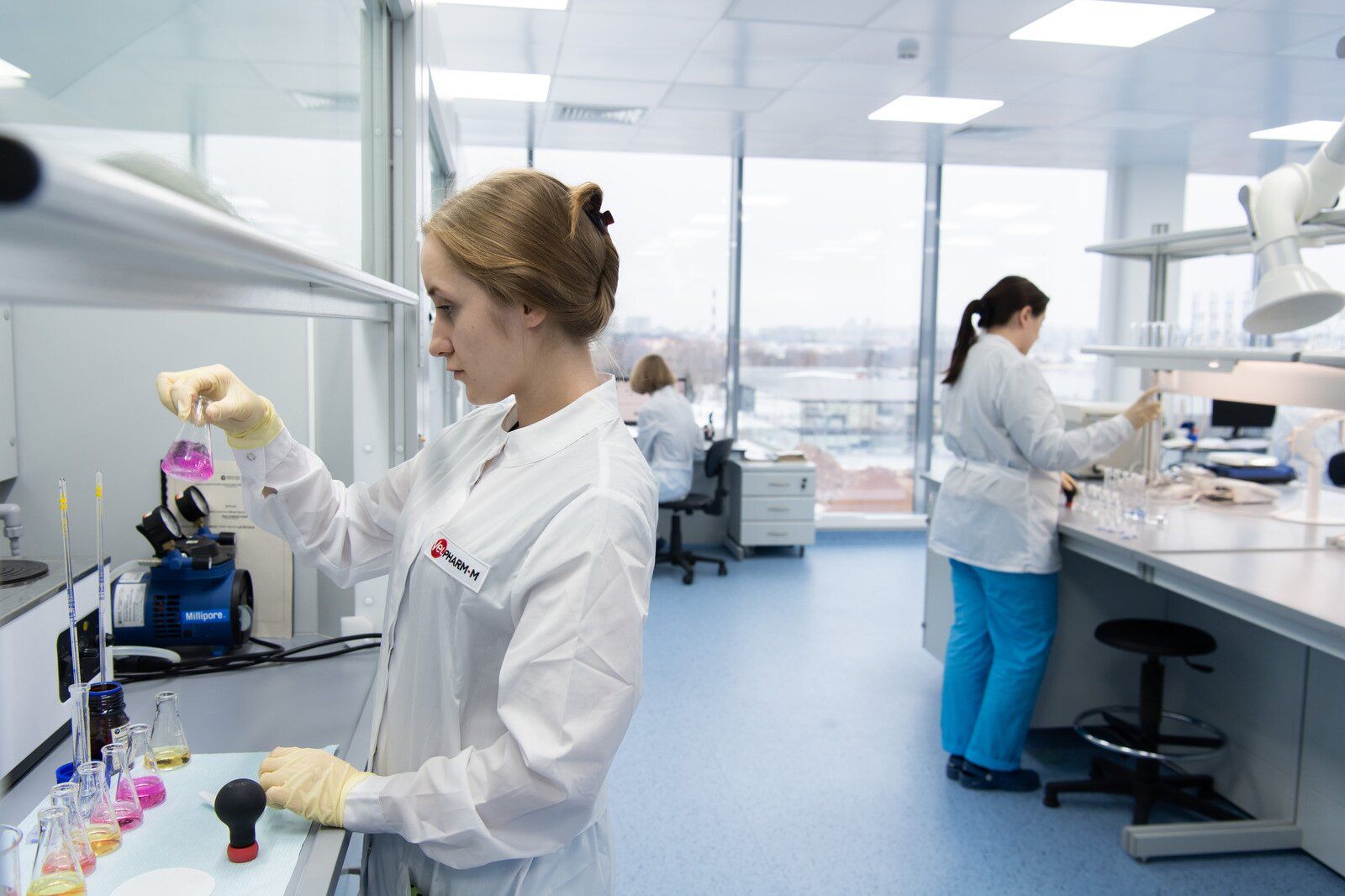
The first solid drug form production line launched on the new Velpharm M factory at Technopolis Moscow Special Economic Zone (SEZ). Chairwoman of the Federation Council Valentina Matvienko and Moscow Mayor Sergei Sobyanin attended the opening ceremony.
“I have to say, we have been hard at work on this project in Moscow for the last five years. One of the largest pharma clusters in the country is forming at the special economic zone. Most of the leading Russian pharma producers are concentrated there. Six production sites are already operating; another three will be open this year and six more in the next four years. The production output at that site is projected to grow 15 times; it will be one of the largest pharma clusters in Russia, and not only in Russia. They are going to produce over 100 vital drugs. Most of them are not currently produced in Russia,” said Moscow Mayor.
In particular, thanks to this new production site, we are going to cover 80 per cent of the Russian demand for cancer drugs.
The solid drug production factory was designed and built from scratch, which was a key event in Russian pharma industry’s history, said Valentina Matvienko. According to her, the factory is to produce over 300 drugs in the vital groups. Over 1,000 new modern jobs will appear there when it reaches full capacity.
Ms. Matvienko added that implementing such an ambitious project would be impossible without the government and Moscow Mayor’s support. She thanked Sergei Sobyanin for the amazing changes he has helped bring to Moscow.
“Mr. Sobyanin, I’m completely honest here: it is pure joy to witness Moscow becoming ever more beautiful and great to live in year after year,” said Ms. Matvienko. “At the same time, you personally attend to new smart production sites in Moscow driving its economy and creating new jobs, which is beyond commendable. Thank you for your active support of that project.”
Lyudmila Shcherbakova, President of Bright Way Industries Group that has already created four pharma clusters in Russia, earned special recognition and gratitude at the production line opening ceremony. Moscow Mayor emphasized that the new facility was launched as quickly thanks to her efforts.
This factory has all chances to become one of the pharma leaders both in terms of quantity and quality of its output, added Ms. Matvienko.
The SEZ Alabushevo site in Zelenograd was chosen for the new facility’s construction. The 3 hectares large land plot is located at 50 Generala Alekseeva Prospekt.
The pharma facility construction started in December 2019 and finished exactly three years later, in December 2022. Its total footprint is 33,700 square meters. In addition to full cycle production, new drugs will also be developed there.
In the next few years, they plan to start making drugs to treat multilocular sclerosis, chronic renal disease, respiratory conditions, heart conditions, cancer, etc. “Here, we’re going to start making drugs that have never been produced in Russia before. In 2023-2024, 10 solid and sterile drug production lines will be launched to make 300 products,” wrote Moscow Mayor on his Telegram channel.
The new factory’s capacities are enough to produce up to 1.7 billion pills, including coated ones, 180 million gelatin capsules, 45 million powder packages (sachets), 1.7 million vials of lyophilized drugs, 24 million vials of eye drops, 5 million of pre-filled syringes per year.
The facility is being built with government support. The Federal Industrial Development Fund, for example, granted RUB 1.5 billion worth of preferential loans to the company. The Moscow Fund for Industry and Entrepreneurship Support, in turn, is compensating a part of loan interest payments: over RUB 1.6 billion in total.
Velpharm M, LLC have already invested RUB 4 billion in the factory. Its location on the SEZ grounds entitles the investor to federal and municipal tax preferences.



Technopolis Moscow SEZ pharma cluster
The pharma cluster brings together 9 pharma developers and producers: BIOCAD, R-Opra, Velpharm M (Bright Way Industries), Generium-Next, Sputnik Technopolis, Biojet, Oncotarget, Rada-Pharma, Amedart. Together, those companies have already invested RUB 25 billion. The total investment amount by now is RUB 37.2 billion.
Six production sites at the cluster are already operating:
— The BIOCAD site is producing 34 original drugs (20 international non-proprietary names (INNS)) to treat 11 conditions, including multilocular sclerosis, cancer, blood cancer, neurology, rheumatology and orphan diseases;
— Sputnik Technopolis makes Sputnik V vaccine and other anti-viral drugs;
— Oncotarget is producing 27 INNs that treat neural conditions, cancer and other major disorders;
— In the next few years, Velpharm M is planning to start making over 300 drugs to treat multilocular sclerosis, chronic renal disease, respiratory conditions, heart conditions, cancer, etc.
— Amedart produces drugs that treat cancer, HIV, renal disease and diabetes;
— Rada-Pharma is making products that treat cancer, female reproductive system dysfunction and skin conditions.
Three more pharma production facilities are to be launched this year.
By 2027, the number of world-tier pharma production facilities at the cluster will rise to 15; after reaching full production capacity, their combined earnings are projected to grow over 15 times.
Two companies in the cluster are going to set up production in Alabushevo under offset contracts. Another five such contracts are in the works.
After the companies that form the pharma cluster reach their full production capacities, the share of Russian-made drugs at the domestic market will grow by 30 per cent. The number of international non-proprietary names to be produced will be 128 (102 of them vital and essential drugs), 98 of which have never been made in Russia before. That’s going to cover 80 per cent of demand for Russian-made cancer drugs.
A project to start immunoglobulin production at the SEZ is now in the works. The investment amount planned for it is RUB 5.1 billion; 212 new jobs will be created.
A drug packaging production site is under construction at Alabushevo. Premium Standard Technopolis, LLC is the resident.
.jpg)
.jpg)

Moscow pharma industry
Moscow is the largest producer of drugs and medicinal products in Russia. Right now, there are 95 companies operating in the city that employ 15,000 people.
In January-November 2022, the combined production output of all pharma companies in Moscow was over RUB 30 billion. This is 18.4 per cent more than in the similar period of the year prior.
Offset contracts are the Moscow Government’s most ambitious project focused on drug import substitution and domestic pharma industry development. Those contracts allow localization of manufacturing in exchange for guaranteed supply of goods for state needs.
Four offset contracts for drugs and medicinal product supplies have been signed to date. The total of product deliveries under those contracts will reach about RUB 42 billion in 10 years; the total investment amount is estimated at RUB 10.8 billion.
Taken together, production sites built that way will be able to produce 2.5 million packages of medicinal drugs a year. Moscow is going to be able to set up production of 60 substances (international non-proprietary names), 21 of those having been imported to Russia.
New production sites have already been launched and are already supplying drugs and medicinal products to hospitals and people with benefits.
BIOCAD, for example, has built a production site at Alabushevo, capable of producing up to 900,000 packages of drugs per year. Under one of the contracts, it’s supplying 34 original drugs (20 INNs) to treat 11 conditions, including multilocular sclerosis, cancer, blood cancer, neurology, rheumatology and orphan diseases. The total supply amount is estimated at be RUB 14 billion in 7 years.
Hemamed LLC located their factory at Pechatniki site. The project output of their factory making products for ostomy patients (Urine, ostomy bags, etc.) is up to 5.5 million items per year. The factory’s total footprint is 2,100 square meters; it employs 35 people. It supplies 44 product types under an offset contract. The total supply amount contracted for 8 years in RUB 8.6 billion.
The factory built by R-Opra company (R-Pharm Group) in Alabushevo (one of Technopolis Moscow sites) is projected to produce 56 substances (31 INNs) to treat or prevent endocrine conditions, cancer and heart diseases. Their planned production capacity is up to 4 million packages a year. The company will launch deliveries under the offset contract in 2023. The total amount to be supplied in 7 years is RUB 18.4 billion.
Moscow Endocrine Plant is the largest Russian producer of analgesics, anti-bacterial drugs, narcotic and psychoactive substances. Their production capacities are up to 500 million product items per year. As per their offset contract, the company has to localize production of 20 vital drugs (9 INNs), including anti-glaucoma, anti-bacterial, analgesic, anti-depressant and anti-psychotic substances. Product deliveries are slated to start in 2023. The total amount to be supplied in 8 years is RUB 1.1 billion.
In July 2022, the minimal investment threshold for new or modernized production sites under offset contracts was lowered from RUB 1 billion to RUB 100 million, making it possible to expand the offset contract use significantly.
The decisions to sign offset contracts with five more pharma companies have already been made. The total private investment amount under the new contracts will be at least RUB 5.5 billion. Production of 84 drug substances (INNs) will be localized in Moscow as a result.
Technopolis Moscow SEZ
Technopolis Moscow Special Economic Zone (SEZ) was established in 2006. Yet, only in 2016, after being transferred under the Moscow Government’s control, its development started in earnest.
SEZ residents are relieved of the property, transport and land taxes. Their income tax rate is just two per cent. The free customs zone mode and preferential land lease conditions are also in effect. After a facility is complete, a resident can buy the land plot it’s built on for just one per cent of its register value.
Technopolis Moscow SEZ includes five production sites that take up 223 hectares in total: one of them is in Pechatniki and four are in Zelenograd (Alabushevo, Micron, MIET, and Angstrem).
Right now, the technopolis is a flagship of the new Moscow industry. 200 companies are operating there: 90 high-tech ones are residents.
They give jobs to over 13,500 people. In three quarters of 2022, the resident companies created 1,400 new jobs.
Their accumulated investments are already in excess of RUB 120 billion.
Three high-tech clusters: pharma, automotive, photonicsµelectronics, were formed in the SEZ in 2022.
The automotive cluster will become a production hub for cars and trucks, utility, off-road vehicles and batteries. It’s going to include over 40 companies: automobile, microelectronics, composite and charger station producers.
Over 40 companies participate in the photonics and microelectronics cluster. With photon technologies, data processing rate can be 50-100 times faster and their energy consumption 5-10 times lower. One of the cluster’s first projects is setting up an active photonic integrated circuits factory. Those circuits are used in telecom industry, radio photonics, laser systems, healthcare, optical computations, etc. PIC production at Technopolis Moscow will pave the way for Russian-made telecom equipment and new-generation optics systems.
Sergei Sobyanin: Sanctions did not hinder Moscow from actualizing its economic potential in 2022