Sergei Sobyanin: Moscow ranks second among global urban economies
The Moscow economy accounts for one-fifth of Russia’s economy. Over the past few years, the gross regional domestic product (GRDP) has increased by one-third, while the volume of investments has grown more than three times. Sergei Sobyanin shared this in his annual report on the results of the Moscow Government’s work.
“We have successfully implemented dozens of projects. Neither COVID-19 nor sanctions have been able to halt Moscow’s growth. Today, Moscow is a steadily growing city that ranks second among urban economies in the world, according to recent World Bank data. This is, of course, a significant achievement,” added the Moscow Mayor.
The Moscow Government signs dozens of offset contracts for the supply of medicines, medical devices, utility equipment, and other essential products for the city.

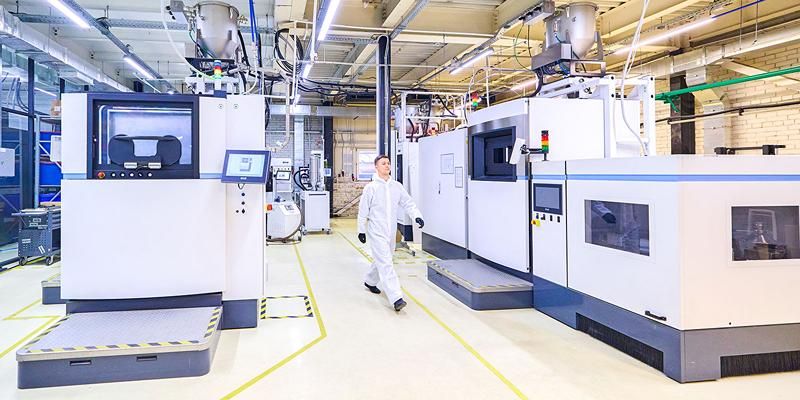
Today, the city is implementing a number of mega-projects aimed at the development of industry and innovation. Among these are the formation of the largest pharmaceutical production cluster in Russia, the development of a federal center for unmanned aerial systems, the creation of new clusters in photonics, quantum technology, and microelectronics, as well as further development of the innovative centers “Skolkovo” and “Vorobyovy Gory.”
“A global metropolis that ranks among the top three cities in the world. A world attractor for highly qualified specialists and innovations. A locomotive of development and the foundation of the country’s technological sovereignty. Leadership in the implementation of innovations across all sectors. This is how we see the Moscow economy,” stated Sergei Sobyanin.
Since 2010, the city has formed a powerful transport infrastructure comprising arterial roads, the metro, and railways. Additionally, an active reorganization and repurposing of industrial areas is underway. Permanent renovation program provides hundreds of thousands of Muscovites with access to quality housing. The opinions of residents will, of course, be paramount in this process,” emphasized the Moscow Mayor.
Since 2010, one in four square meters of the existing housing resources has been built. The availability of housing in Moscow has increased by over 60 per cent for the primary market and doubled for the secondary market since 2010.
According to international experts, Moscow has taken the lead among global cities in public transportation accessibility. Since 2011, 256 new metro stations have been opened, along with the Moscow Central Circle (MCC) and the Moscow Central Diameters (MCD). The MCC started operating in 2016, and in 2023, the world’s largest project — the Big Circle Line — was finished.
Since 2011, the city has constructed over 1,400 kilometers of roads and more than 450 new bridges, overpasses, and tunnels. The road network has grown by 20 percent, and the number of engineering structures has increased by two-thirds. In a decade and a half, Moscow have built almost as many engineering structures as were built in the previous 70 years. By 2030, about 40 new metro and MCD stations are planned to be opened.
Over a thousand parks and green areas have been created across all Moscow districts; courtyards have been fixed.

Furthermore, over 670 new school and kindergarten buildings have been constructed.
The average life expectancy of Moscow residents has increased from 74 to 79 years.
Large-scale projects aimed at creating a new framework for medical care are underway. Among them is the largest program in the world for modernizing 340 polyclinic buildings, with full reconstruction expected to be completed by 2025. Additionally, nearly 50 new polyclinic buildings are set to be constructed by 2028. The city has built and modernized hundreds of thousands of square meters of hospital facilities.

All the most significant and in-demand social services are highly accessible in Moscow. 80 percent of support measures can be applied for while not leaving the house.