Sergei Sobyanin: Moscow is working on the biggest development project in its history
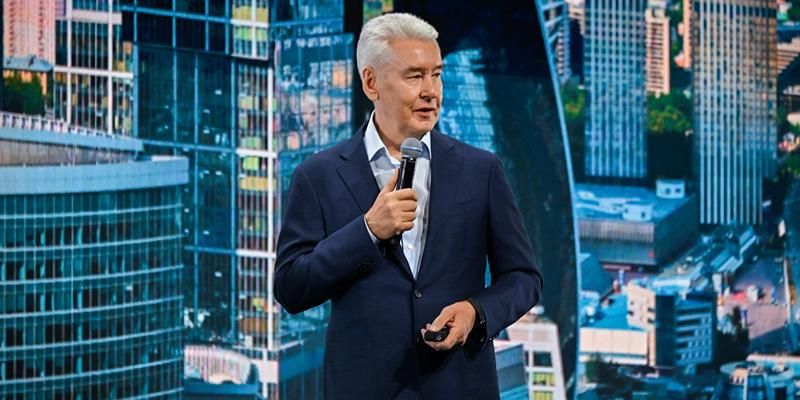
Moscow is among the top five largest cities in the world by economy and spending capacity. Sergei Sobyanin spoke on that in his Moscow. 2010–2030. Urban Development Results and Plans speech at the Finopolis Forum of Innovative Financial Technologies, which took place within the Sirius Federal Territory.
“Moscow is not only the capital of Russia but also the center of production, industry, economy and finance. Moscow’s share in country’s GDP amounted to more than 20 per cent and came from innovation, IT technology and services rather than from oil, gas or coil," notes Sergei Sobyanin.
According to the Moscow Mayor, urban growth is a reality. Urbanization is a global trend. Until recently, the global economy relied on rural areas but today almost 80 per cent of resources are city-wide. “Half is already produced in cities with a population of over a million, and megacities will produce two-thirds of world’s GDP in the coming decades,” adds Sergei Sobyanin.
Moscow is the driver of Russia’s development. It is working on the biggest development project in its history, Sergei Sobyanin emphasizes. For instance, labor productivity in the Russian capital is 2.5 times higher than the national average. This is associated with population concentration and has nothing to do with robotization. Gross domestic product is larger in cities with high population density. “The point is that the more a person produces and provides services to other people in a particular place, the greater the labor productivity. “Moscow has extremely high productivity,” explains the Moscow Mayor.


The city development depends on the residents’ quality of life. Moscow is providing favorable conditions for people to invest in the city and engage themselves with it. Above all, costs were optimized, and consequently the investment component in the budget structure increased by 1.5 times.
“We have supported this investment component in the face of the crises that occurred in 2010, 2014, 2020 and 2022. Despite the decline in income and economic slowdown, we continued to invest in the city. By constantly moving in an upward spiral, we protect the city from the economic collapse and downward trends,” says Sergei Sobyanin.
According to the Moscow Mayor, the mission of the megacities is not only to attract the population but also to provide opportunities for traveling around the city in a comfortable way. Today, about 13 million residents live in Moscow, and another 10 million people live in the Moscow Region. The new transport system has been launched to help people get around the city.
“This involves public transport, the construction of the Moscow Metro and the Moscow Central Circle, which increased the network by almost 1.8 times. By 2030, we will launch three more lines and 35 metro stations,” adds the Moscow Mayor.
We are developing the network of the Moscow Central Diameters to connect the capital with the nearest cities in the Moscow Region. About 360 kilometers of railway lines have been built. They are being integrated with other routes using 84 train stations and 43 new facilities to be constructed.
“In collaboration with the Russian Government, we are delivering a large-scale project to connect two mega-agglomerations, St. Petersburg and Moscow with their adjacent areas, to accommodate approximately 40 million Russian people. This will create the megalopolis that is emerging in other countries, forming a new economy of Russia,” says Sergei Sobyanin.
The city has also launched a new road network, including the Moscow High-Speed Diameter with 400,000 cars travelling along it every day. Over the course of 10 years, the project to reconstruct transport interchanges of the Moscow Ring Road has been successfully completed.
“This is a new transport system in Moscow, which has radically changed traffic. Oddly enough, it did not solve the problem. This is a challenge that requires not only building but also managing the processes and creating an intelligent transport system to control traffic lights, traffic, intersections, the movement of passenger trains, buses and the metro,” adds Sergei Sobyanin.
Moscow is one of the leaders in housing construction. By 2032, all the costs of the renovation project are to be fully returned to the budget. According to Sergei Sobyanin, the program is in progress with the housing supply expanded regularly.
Healthcare is one of the priorities of the capital’s social policy. Life expectancy in Moscow is increasing thanks to quality and accessible healthcare.
“We were tasked with upgrading the infrastructure, services, technologies, people’s attitude towards their health and the doctors’ attitude towards patients. We are currently completing the reconstruction of the entire outpatient sector, comprising all Moscow’s clinics, not small private clinics but institutions available to all Muscovites with world-class quality services, and also building and reconstructing hospitals. Over the course of several years, we will ensure that all the hospitals are housed in new reconstructed buildings equipped with the latest technology,” says Sergei Sobyanin.
Moscow doctors are actively applying new technologies, including those powered by artificial intelligence (AI) or computer vision.. Diagnosis using neural networks has achieved 95 per cent accuracy. A clinical decision support system has also been implemented in all Moscow clinics.
“Next, we are given the simple task of creating a digital twin of a citizen or a patient to see their medical record throughout life and predict, prevent and treat their diseases. This is what the whole world is striving for, but I believe that we will be among the first to do so,” the Moscow Mayor adds.
Moscow education is one of the best in the world with its institutions offering quality knowledge in each area of the city. Powerful educational complexes are open in the Russian capital, including dozens of educational institutions with an average enrollment of 3,500 to 7,500 children.
“They are large educational complexes that are capable of providing a child in any area of Moscow with a quality education. Moscow schools are now among the top 5 schools in the world, second only to Chinese schools with their own specific nature. There is almost no country in Europe that can compete with Moscow’s education system,” states Sergei Sobyanin.
The vocational education modernization project has been launched.
Currently, 90 major digital technology projects are being delivered in Moscow. For example, modern video surveillance systems ensure the citizens' safety while reducing the crime rate. Moscow residents can also use most public services online.
“The mos.ru digital ecosystem (public services) ranks first in the UN world quality and coverage ranking. But we are not going to rest on our laurels, we must improve this area,” adds the Moscow Mayor.
Industry, along with infrastructure, is developing rapidly in Moscow. The city builds high-tech enterprises every year, improving its investment potential. Moscow is also the driver of Russia's creative economy. It is now one of the fastest growing sectors, employing more than a million people. About 150,000 city residents are engaged in the film industry and related sectors.
The city is supporting the Russian Armed Forces, participants in the Special Military Operation, and is also engaged in the restoration of Donetsk and Luhansk.
The capital's development program until 2040 provides for the improvement of digital technologies, education, healthcare and transport systems as well as dynamic urban development. Moscow will seek to remain a safe and creative city both for residents and visitors.
“Moscow, despite all the challenges, is now among the top five largest cities in the world by economy and purchasing power parity. It is extremely hard to stay in the game but we will try our best to make Moscow the best city in the world,” concludes Sergei Sobyanin.
The Finopolis Forum of Innovative Financial Technologies took place from October 16 to 18 within the Sirius Federal Territory. It is aimed at promoting innovative technologies and facilitating their implementation in the Russian financial sector.