Sergei Sobyanin endorses 2024–2025 Key Construction Project List

On the eve of the Builder’s Day, which is celebrated on August 11 in 2024, the Moscow Government Presidium held a meeting to discuss the seven-month achievements of the Urban Planning Chamber and plans for the near future. Moscow builders’ priority is still to create a comfortable well-balanced urban environment, expand transport and engineering infrastructure and fulfill the commitments under the renovation program. However, unlike in previous years, this has to be done in the context of unprecedented sanctions.
In January-July 2024, the Moscow Urban Planning Chamber has successfully fulfilled its commitments. 5.3 million square meters of real estate were put into operation, and transport and engineering infrastructure facilities were built fast as before.
The meeting also outlined the following key facilities to be put into operation by the year-end and in 2025:
— the first section of the Troitskaya metro line;
— the Potapovo station of the Sokolnicheskaya metro line;
— buildings for the new campus of the Bauman Moscow State Technical University (BMSTU);
— the Ice Palace in the Mnevnikovskaya floodplain;
— the multi-purpose complex of the St. Vladimir Pediatric Clinical Hospital;
— the new complex of Moscow City Oncological Hospital No. 62 in Skolkovo;
— buildings of the National Space Center; and
— buildings of the Central Moscow Hippodrome, with the restoration project being underway.


Enhancing transport infrastructure. The metro and MCC
Since 2011, Moscow has introduced 238.2 kilometers of lines, 114 new stations, 12 depots of the Moscow Metro and the Moscow Central Circle (MCC) and expanded the Moscow Metro network 1.8 times.
By the end of 2024, builders are going to build 18 kilometers of lines, 8 stations and a train depot. In particular, they will launch the first section of the Troitskaya line with 4 stations, such as Novatorskaya, Universitet Druzhby Narodov, Generala Tyuleneva and Tyutchevskaya, in addition to Potapovo station of the Sokolnicheskaya metro line. At the moment, they continue building the Rublyovo-Arkhangelskaya line and have also begun the main Dostoyevskaya station stage on the Circle Line, 71.4 kilometers of lines, 30 stations and 5 new train depots to be introduced by 2030.
Railroad transport
The Moscow government is implementing a large-scale program to modernize the railway infrastructure of the Central Transport Hub together with the Russian Ministry of Transport, Russian Railways and the Moscow Region Administration. Since 2011, they have built 392.9 kilometers of railroad (including the MCC), introduced 53 new tracks (including the MCC) and reconstructed 56 existing stations. New Vostochny Terminal for long-distance trains has been opened at the Cherkizovo interchange hub.
Since the beginning of this year, the authorities have launched 7 facilities, namely:
— the Belorussky Railway Station lobby integrating the MCD-1 and MCD-4 diameters;
— the southern lobby of the Lianozovo commuter terminal (MCD-1);
— the northern lobby of Moscow City (former Testovskaya station (D4) with access to Mukomolny Proyezd and the Greater City;
— an overpass across Lenina Street as part of the Zelenograd — Kryukovo Moscow commuter terminal (MCD-3);
— a covered pedestrian gallery that connects Kutuzovskaya MCD-4 station and the metro;
— a lobby of the MCC Moscow City station to ensure MCC — MCD-4 integration; and
— the Mitkovo Moscow commuter terminal (MCD-3).
Moreover, they are going to renovate the Shcherbinka in-city commuter terminal (MCD-2) by the end of this year.


Road network
In 2011–2024, Moscow built 1,372.3 kilometers of roads, or about 25 per cent of the total existing road network, plus 437 tunnels, overhead roads and bridges, so the number of artificial transport structures increased by 65 per cent; say nothing of off-street pedestrian crossings (314). In particular, since the beginning of this year, builders have introduced 12.3 kilometers of roads, 8 artificial structures and a pedestrian.
The most significant projects cover the following facilities:
— an unprecedented pedestrian bridge on the Balchug Island spit;
— transport interchange at the intersection of the Moscow Ring Road and Verkhnie Polya Street (mostly completed in March), and
— an overpass in the area of the 24 th and 25 th kilometers of Leningradskoye Motorway (opened for traffic in March 2024).


By the end of 2024, they are going to commission a number of critical facilities, e. g.:
— the junction at the Moscow Ring Road/Altufyevskoye Motorway intersection;
— the route connecting the Moscow High-Speed Diameter (MHSD) and the Solntsevo — Butovo — Varshavskoye Motorway (Phase I);
— the section of the Solntsevo — Butovo — Varshavskoye Motorway from the Novomoskovskaya metro station (Stolbovo transport hub) to Polyana Street (Phase I);
— an alternate route for Kaluzhskoye Motorway (stage 1).
176.5 kilometers of roads, 40 artificial structures and 52 pedestrian crossings are to be built in 2025–2026.
Residential and commercial real estate
5.3 million square meters of real estate, including 2.2 million square meters of housing, were commissioned in the seven months of this year, with 139.7 million square meters of real estate built since 2011; so, the total real estate capacity has grown by 31 per cent. In particular, they have built 60.3 million square meters of housing, thus, having increased Moscow’s housing stock by 25 per cent, about 2.5 million people living in building that have been built after 2010.
The advanced construction of commercial real estate and social facilities (79.4 million square meters) has enabled the balanced city growth and created new jobs as there are more available jobs in 99 per cent of Moscow’s districts, including those in the suburbs.
Comprehensive area development
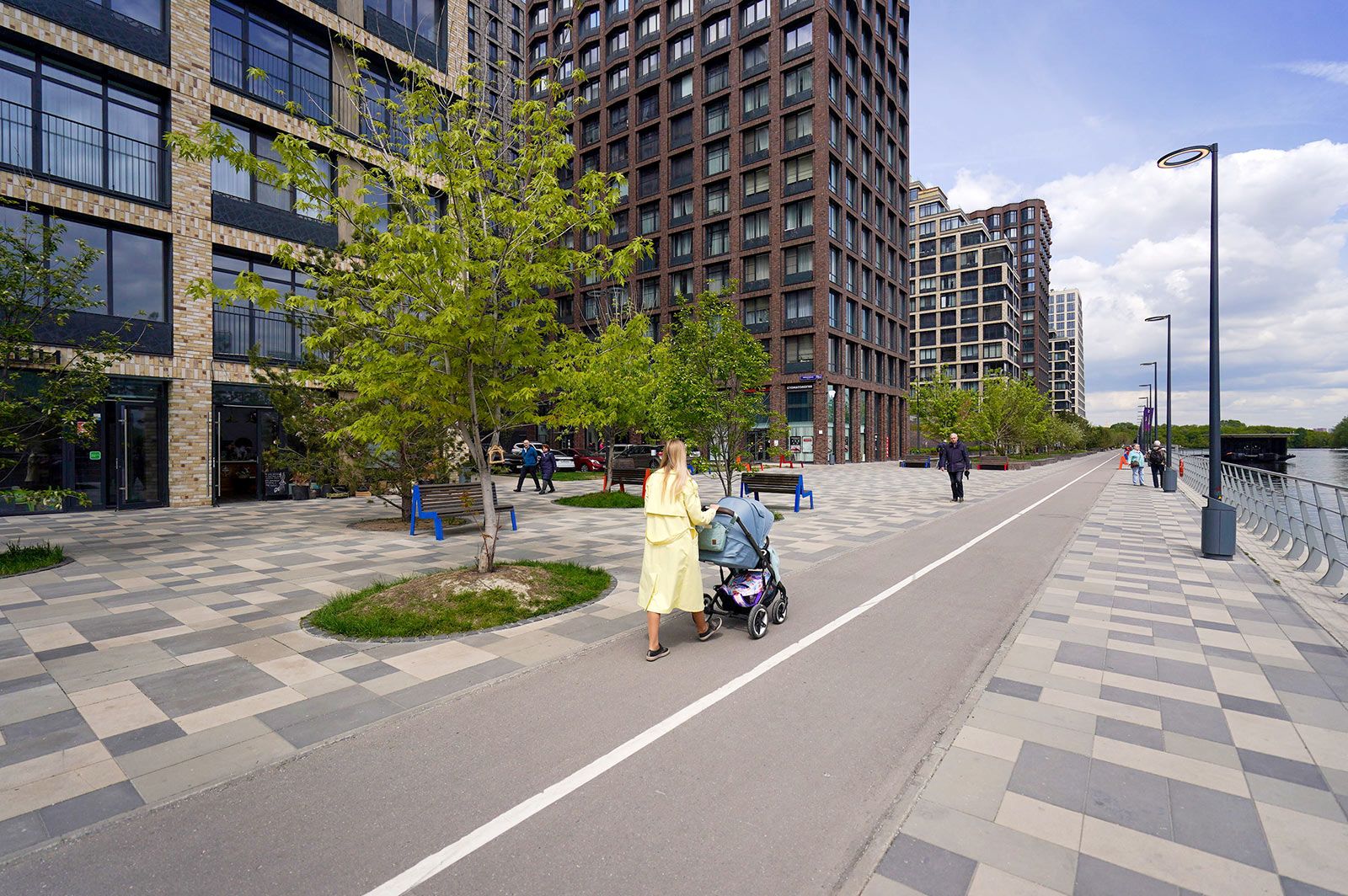
The Moscow key urban planning program involves comprehensive development of former industrial sites and inefficiently used areas. As of August 1, Moscow is running 86 multi-purpose development projects covering the total area of about 1,114 hectares to build around 22.8 million square meters of real estate and create about 235,000 new jobs.
After they are wrapped up, the annual budgetary effect is expected to exceed RUB 487 billion.
Renovation program
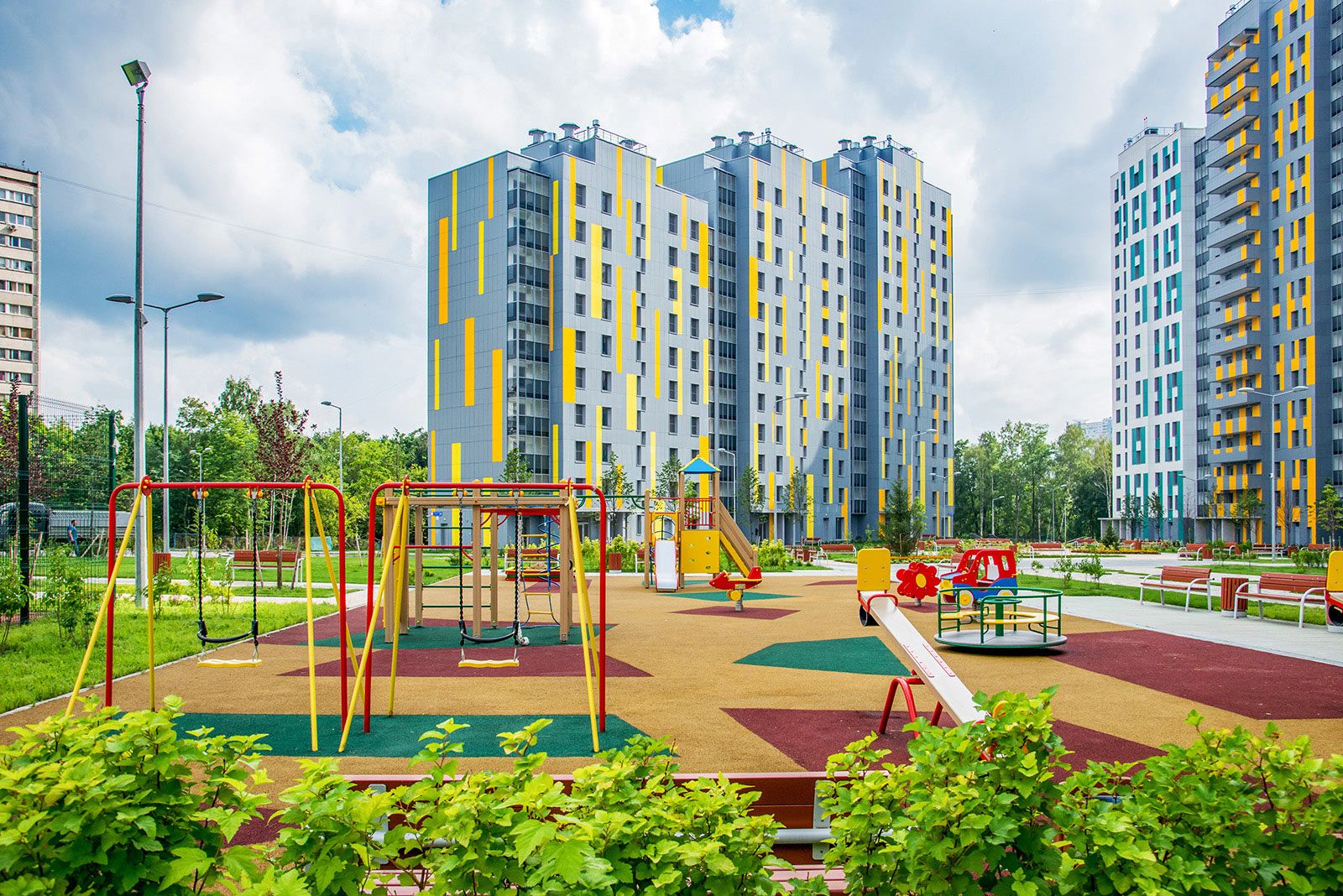
As a result of the renovation program, about one million Muscovites will move to new apartments. The renovation-covered neighborhoods will feature a fundamentally different urban environment to offer balance, openness, comfort and pleasure.
The program covers 5,176 residential buildings, which is about 350,000 apartments with a total area of 16.4 million square meters. In fact, the authorities have selected 623 sites that may potentially provide for approximately 10.2 million square meters of housing. If counting the development areas with new homes for program participants, the total capacity is estimated at more than 13 million square meters.
They have built 322 residential quarters with a total area of 4.5 million square meters to date, which will make it possible to resettle more than 1,000 old five-story buildings. 464 buildings with a total area of 9.1 million square meters are being designed and constructed.
The first new residents moved into newly built apartments in February 2018, about 168,000 people moving or having settled to date; 6 districts has already accomplished the renovation program.
Social facilities
1,080 social infrastructure facilities have been built in Moscow in 2011–2024, these including 600 schools and kindergartens, more than 160 hospitals, over 210 sports and over 80 cultural facilities.
In particular, over the first seven months of this year, the local social infrastructure was enhanced with 48 facilities, including 23 schools and kindergartens, 8 healthcare facilities, 10 sports and 7 cultural facilities.
The authorities have completed some unprecedented projects, including:
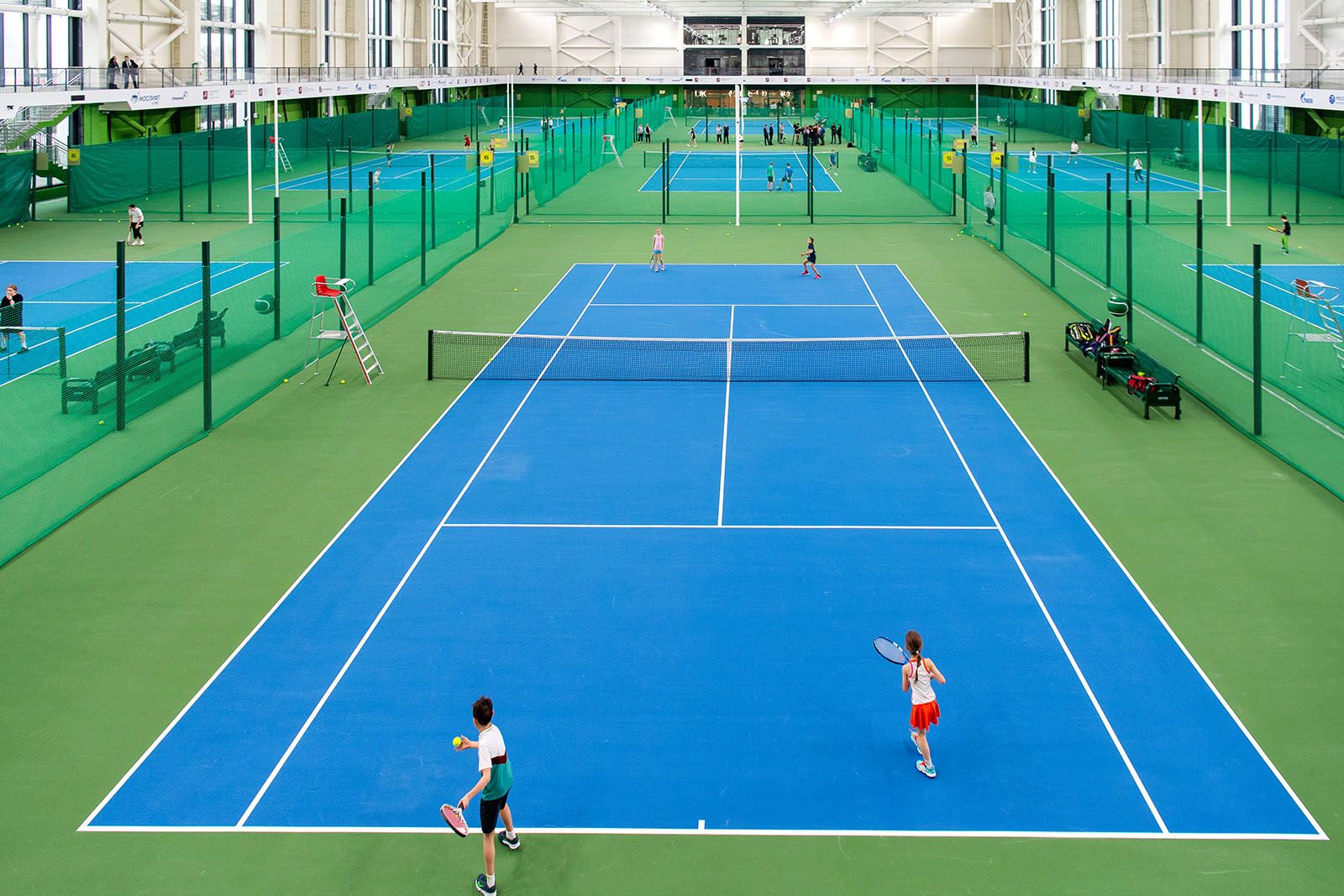
— the tennis center in Luzhniki and the Ramenki sports and recreation complex;
— 3 blocks for the new campus of the Bauman Moscow State Technical University (BMSTU), namely the central cluster, Quantum Park and a multifunctional facility for students.
.jpg)
.jpg)


By the end of the year, they will finish Moscow’s largest multi-purpose clinical center commonly known as Kommunarka, the flagship center at V. M. Buyanov City Clinical Hospital and the Ice Palace in the Mnevnikovskaya floodplain and still continue building the multidisciplinary facility at the St. Vladimir Pediatric Clinical Hospital and buildings of Moscow City Hospital No. 62, which will be ready in 2025. Currently they are doing to design a new building for N. V. Sklifosofsky Research Institute for Emergency Medicine and have begun comprehensive reconstruction of the Central Moscow Hippodrome on Begovaya Street.
Urban planning and public services in construction
In fact, the city’s steady growth largely depends on how prompt and how well the authorities provide public services in the construction sector. Since the beginning of this year, the Moscow Committee for Architecture and Urban Planning has issued 5,392 urban development plans (documents that set parameters of possible construction in specific areas) and 281 certificates of approval for architectural and urban planning concepts.
Meanwhile, the Moscow Committee on Pricing Policy in Construction and State Appraisal have reviewed 4,786 design documentation packs.
Basic public services in construction have been digitalized and are provided to developers in the most convenient way possible.