Sergei Sobyanin: Moscow’s economy successfully adapts to restrictions
Moscow’s economy has successfully adapted to the restrictions imposed against Russia and is steadily growing again, Sergei Sobyanin writes on his Telegram channel.
“We are seeing an increase in business activity in all major industries, including the secondary and consumer sectors. And we have approved the social and economic forecast for the city for 2024–2026 accordingly,” Moscow Mayor announced.
Source: Sergei Sobyanin’s Telegram channel @mos_sobyanin
In fact, the social and economic forecast for 2024–2026 reflects a comprehensive assessment of key factors and the city’s performance indicators in today’s context, both internal and external.
In 2022–2023, Moscow’s economy successfully adapted to the sanctions that were imposed against Russia and is on the steady growth track again.
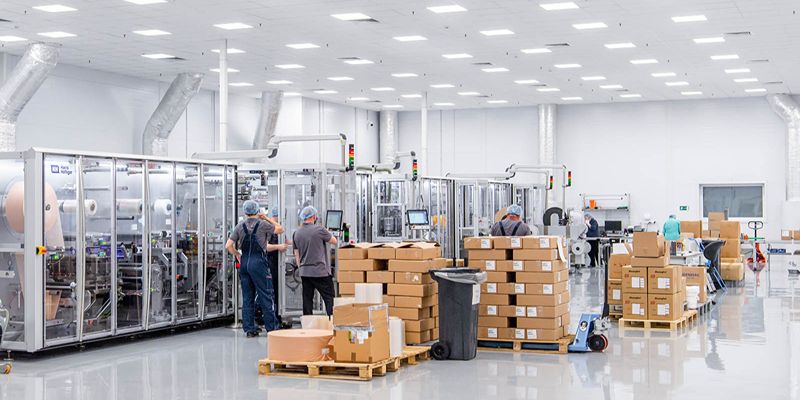
In 2023, business activity is growing in all major industries, including the secondary sector, in particular, manufacturing and construction, and the consumer sector, namely, commerce and services.
From 2018 to 2022, Moscow-based manufacturing enterprises more than doubled their outputs, with the growth estimated at a 13 per cent by the end of 2023, while in 2024–2026 outputs are projected to increase by 6.5–7.5 per cent annually. The main growth drivers are increased demand within the country, import substitution and reorientation of exports to the markets in friendly countries.
High investment activity strongly pushes economic growth up, too. At the 2023 year-end, fixed investments is to grow by almost 7.5 per cent to reach RUB 6.9 trillion. A 4.8–6.2 per cent annual increase is expected in 2024–2026.
The investments still remain diversified across the sectors. A significant amount of budget funds is spent on the development of transport infrastructure, housing and construction of social and cultural facilities. Substantial private investments will be allocated in order to boost IT and communications, manufacturing, R&D, and other sectors that create highly skilled jobs.
Retail and the services will traditionally remain major drivers of economic growth. At the end of 2023 retail turnover and paid services are expected to increase by 5.5 and 10.6 per cent y-o-y. In 2024–2026, the growth is projected at 2.7–3 and 4.3 per cent, respectively. The key factors for positive dynamics will be a decrease in inflation and growing real incomes.
In light of the ongoing situation in the main sectors, Moscow’s gross regional product (GRP) will rise by at least 3 per cent by the end of 2023 and is expected to demonstrate an annual 2.5–3 per cent increase in 2024–2026.
Thanks to continued strong business activity, the official unemployment rate will remain historically low at 0.3 per cent.
Inflation is expected to be 6.5 per cent by the year-end and 3.8–4.3 per cent in 2024–2026 annually.