Sergei Sobyanin: The second regular river route has connected the Moscow’s south and southeast districts
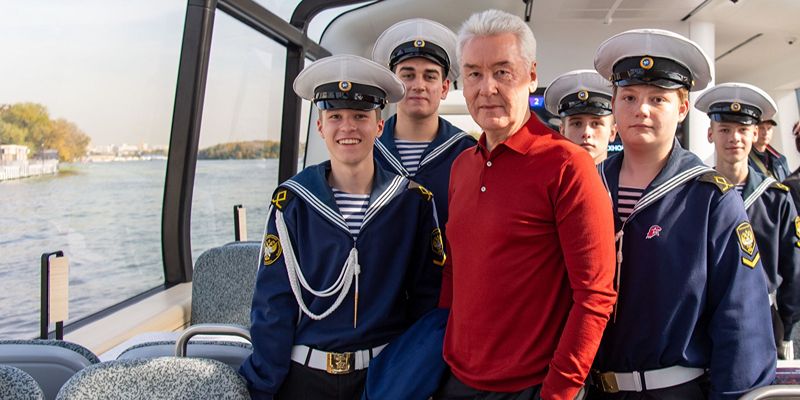
The second regular year-round route of river electric transport on the Moskva River has opened in the Russian capital: it runs from ZIL to Pechatniki. Sergei Sobyanin traveled on the electric vessel Zhuza from Pechatniki pier through Nagatinsky Zaton to the Southern River Station.
“Today we launch the second unique electric vessel route on the Moskva River. The first route is extremely popular: almost a quarter of a million passengers have already used it, but I hope that this route will be no less attractive and in demand,”-said the Moscow Mayor.
Such regular river routes on electric vessels are a unique project not only for Moscow and the whole of Russia, but also for the world practice. It is the world’s first year-round, cutting-edge electric water transport. “There are no such vessels anywhere in the world, and we have them. They will run all year round, even in winter,” added Sergei Sobyanin.
Russian President Vladimir Putin and Moscow Mayor Sergei Sobyanin opened the first regular river transportation route in June 2023. It has connected Kievsky Railway Station with the Heart of the Capital berths in the area of the residential complex of the same name on Shelepikhinskaya Embankment. The route is 6.5 kilometers long, and approximately 800,000 people live in the immediate vicinity of the route.
Today, about 2.5 thousand trips are made on electric vessels daily from 7:00 a. m. to 11:00 p. m. As a rule, all vessels are almost 100 percent full.
Over 220,000 people have traveled the first route in three months. The most popular departure point for the first route is Kievsky berth, where about 40 percent of passengers started their trip.
All the Moscow ports have been reconstructed, and steamships and route ships will call there. “Moscow is a port of five seas, you can sail to any sea from here,” added Sergei Sobyanin.
Convenient crosswalks have been made around the piers, and where possible, city ground transportation and cab stops have been moved closer.
The length of the second regular route ZIL-Pechatniki is more than nine kilometers. Now 700 thousand people live nearby it, and almost 1.5 million square meters of new real estate are being built, with another 150 thousand people to live there after that.
Gradually, electric vessels are increasingly replacing other transportation modes. The new river route will save passengers up to 30–40 minutes. The way from Pechatniki to Nagatinsky Zaton by car will take about 28 minutes, by public transport — about 40 minutes including stops, and by river only 12 minutes, which is three times faster. It takes about 40 minutes to get from Nagatinsky Zaton to the Southern River Station by public transport, and those who use the river electric transport will reduce the travel time almost three times — to 17 minutes. The trip from South River Station to Maple Boulevard Pier will take half as long — about nine minutes — compared to other public or private transportation.
Thus, the launch of two innovative electric vessel routes will improve transportation services and provide alternative travel options for about 1.5 million people living in 18 Moscow districts.
Vodohod.Passenger Port has become the river transport operator. In 2021, following the tender, the Moscow Government entered into a full life cycle contract with the company. According to it, the operator is in charge of the supply, repair and maintenance of electric vessels and floating docks for 15 years.
To provide passenger service, 12 floating docks with a diameter of 10 and 16 meters accommodating up to 40 and 80 people will be installed on the Moskva River.
Modern new berths receive up to two vessels at the same time. In the course of their development, a unique, unparalleled solution in the world was used to charge the electric vessel during boarding and disembarking.
A comfortable waiting area with sofas and a bathroom adapted for women with children and reduced-mobility citizens has been arranged for passengers at the berths. If you prefer, you can buy fresh, delicious coffee to take with you on your trip. Boarding through turnstiles with a bright color background and large screen font adapted for visually impaired passengers and passengers with reduced mobility is available. The specialist on duty at the pavilion will answer passengers’ questions and help if necessary.
The berths are equipped with information screens similar to those installed at public transport stops. Regular river transportation is fully integrated into the Moscow transport system. Passengers can pay for their travel using Troika Travel Card, Unified Travel Card for 90 and 365 days at no additional charge, a bank card or biometrics.
The introduction of domestic electric vessels for passenger transportation on the Moskva River is one of the most innovative transport projects of the Moscow Government. The main parts of the electric vessels, including the hull, traction motor, air conditioning system, glazing, skin panels, automated ramp, lighting control system, side doors and all control software, are completely Russian-made. In the future, electric vessels may become unmanned.
Seven electric vessels will run along the second route. Each of them is unique and named after Moscow rivers. This concept was supported by Moscow residents back in 2021. The name of the first electric vessel — Sinichka — was chosen within the Active Citizen project.
The vessels are about 22 meters long and can accommodate up to 50 passengers, and there are special seats for less mobile citizens. The passenger cabin is equipped with information screens and USB-charging stations and provides space for transporting scooters and bicycles.
Comfortable seats and tables make it convenient to use your laptop while traveling. Large panoramic windows and a saloon’s glazed roof have beautiful views of Moscow.
Before launching the regular route, the electric vessels have been tested, including during the winter period. Along with the vessels, the rest of the river transportation infrastructure (berths, turnstiles and ticketing system) has been tested.
The use of electric vessels helps improve the environmental situation in the Russian capital. They are also a good example for private shipping companies. They will be able to switch to electric vehicles on recreational and sightseeing routes by analyzing the performance of the regular routes of the city’s electric vessels.
History of Moscow water passenger transport
The culture of river passenger transportation began to take shape on the Moskva River in the 1930 s. The first river trams appeared in the city in 1931. By 1933, more than 50 vessels popular with Moscow residents were sailing along the Moskva river.
On July 15, 1937, along with the Moscow-Volga canal, two river stations were opened: Southern on the left bank of the Nagatinskaya floodplain and Northern on the Khimki Reservoir. From 1937 to 1941, the number of passengers choosing river routes rose to four to five million per navigation. Later, the Moscow River fleet worked as a full-fledged public transport. But in the 1990 s, it was gradually declining. The Northern and Southern River Stations stopped operating as intended, their buildings were in disrepair.
The river transport is reviving in the last decade, as in 2020, the Northern River Station was opened after a grand restoration. The reconstruction of the Southern River Station building and the improvement of the embankment and the territory in front of it were completed in 2023.


Environmental rehabilitation of Moskva River water area
Since 2011, the Moscow Government has implemented a number of major projects to improve embankments and rehabilitate the environment of the Moskva River.
First of all, the water area was cleared of illegal floating objects that were not registered as ships. As a result, 50 landing stages were dismantled, as they were clogging the riverbed and posing a danger to navigation and the environment. Another 15 abandoned and unused vessels have been removed since the beginning of 2023. In particular, in early September, the Ataman Platov and San Marco motor vessels were towed from an illegal anchorage in the Kozhukhovsky Bay, and a sunken pontoon was raised in the Serebryany Bor area. Several more flooded objects are scheduled to be removed by the end of 2023.
Thanks to the modernization of the Moscow Oil Refinery, city and local treatment facilities, as well as a significant reduction in vehicle emissions, the main source of pollution, the Moskva river water quality has been significantly improved. In recent years, the content of ammonium nitrogen in the lower reaches has decreased by 70 per cent. In the central part of the city, the content of oil products and metals in the Moskva River has halved.
Revival of the Southern River Station
In 2021–2023, Sergei Sobyanin ordered a large-scale reconstruction of the Southern River Station. It aimed to restore the original historical appearance and the main transport function of the station as one of the key navigation infrastructure on the Moskva River.
Now, the renovated station building has a waiting room where you can comfortably wait for your flight, a restaurant and cafe with 80 seats, a ticket office and information desk, offices of tour operators, an observation deck on the roof, and a recreation area with lounge chairs covering an area of more than a thousand square meters with a panoramic view of the Moskva River and the Dream Island amusement park. In addition, there is a multifunctional media room for events (presentations, conferences, chamber concerts). You can also visit the regularly updated exhibition of the Moscow Transportation Museum. Its first exposition is dedicated to the history of urban river transportation.
Apart from the building renovation, a comprehensive improvement of the Southern River Station embankment and the space in front of it was carried out in 2023. Specialists repaired the mooring wall, cleared silt, and deepened the mooring area.
Five berthing areas can accommodate vessels of different classes — from small pleasure streetcars to large cruise ships that sail along the Moscow Golden Ring route. Pavilions for passengers are provided to ensure comfortable and safe boarding and disembarkation, with information steles with ship schedules placed next to the pavilions.
A comfortable recreation area has been created along the entire waterfront. Outdated fencing was replaced with a modern one, and new hardscape was installed. Settling down on comfortable benches, citizens can admire the picturesque view of the Moskva River.
The pedestrian area on a part of the embankment and in front of the station has been paved with granite tiles. Convenient passages and entrances to the station building have been arranged, trees and shrubs were planted. There is also a special stop for tourist buses, parking lots for bicycles and scooters, and parking lots for personal vehicles.
A ground public transport stop has been installed opposite the station. From the side of the Dream Island amusement park, a signalized crossing through Proektiruemy Proyezd No. 4062 running to the main entrance to the station building has been built. You can walk from the Southern River Station to Dream Island in 8–10 minutes.
Cruises to 30 Russian cities will be available from the Southern River Station in 2023. River vessels depart for Ryazan, Murom, Kasimov, Nizhny Novgorod, Cheboksary, Kazan, Ufa and other destinations. The station has welcomed and departed more than 130 cruise ships since the beginning of the navigation season: that is more than 12.5 thousand passengers. This season, pleasure boats on the Moskva River made more than 470 trips from here and carried more than 9.2 thousand passengers. More than 180 thousand people have visited the renovated station and more than 220 events have been held since its opening. The exhibition of the Moscow Transport Museum was visited by about 17 thousand people.
Further development of the area near the Southern River Station and the Dream Island amusement park is expected in the coming years The construction of over 500 thousand square meters of real estate and urban infrastructure facilities is envisaged. Thus, an electric bus park of about 40 thousand square meters will appear here (in place of the Mosgortrans site on Andropov Avenue). It will provide service for more than 200 electric buses and replace diesel buses on city routes.
In addition, a business district of about 19 thousand square meters will be erected. It includes seven buildings with offices, a modern art gallery, restaurants, and cafes, where about 2.3 thousand workplaces will be opened. A multifunctional complex of 120 thousand square meters will also be completed. It will comprise residential buildings, a kindergarten for 150 children, offices, a hotel, restaurants, and a yacht club. They will also build a residential complex of 366 thousand square meters, a school for 425 pupils, and a kindergarten for 225 places.